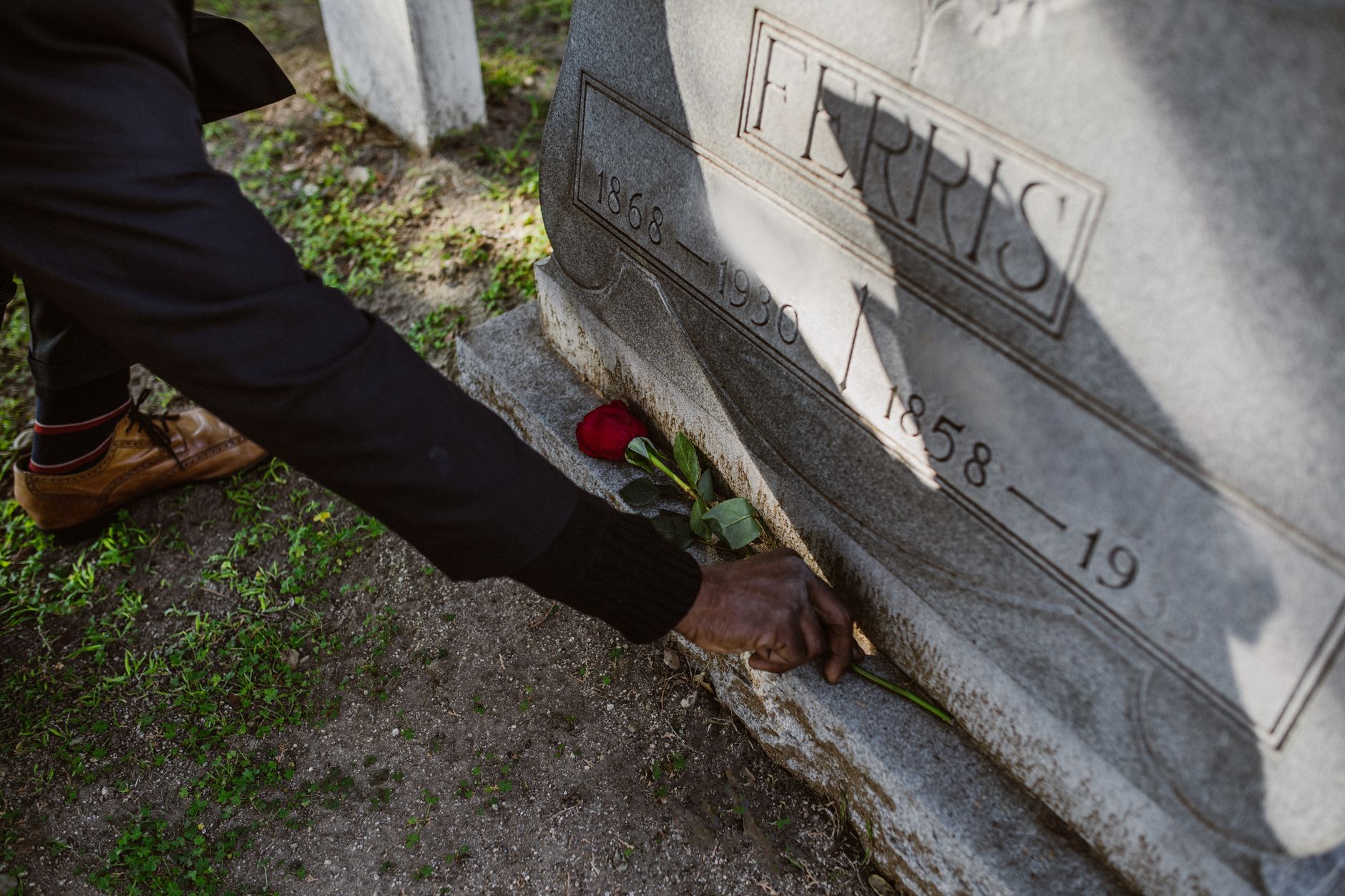
When someone receiving Medicaid-covered long-term care services dies, the state can recover the costs it paid for that care from the person’s estate. This process, called Medicaid Estate Recovery or MERP, affects seniors and their families in every state. If your parent received Medicaid to pay for a nursing home, assisted living, or in-home care, the state may seek reimbursement from whatever assets they leave behind—potentially reducing what you inherit or complicating the estate settlement process.
Every state in the country is required by federal law to pursue Medicaid estate recovery. This isn’t optional policy; it’s a mandatory program established to recoup some of the billions of dollars states spend annually on long-term care services. For someone who spent their final years receiving state-funded care, this means that even after death, Medicaid’s claim may not be finished. The recovery can affect bank accounts, real estate, life insurance proceeds, and other assets—though important protections exist for surviving spouses and children.
Table of Contents
- Who Qualifies for Estate Recovery—Age, Services, and What Triggers a Claim
- Probate vs. Non-Probate Assets—How State Rules Determine What’s at Risk
- Family Protections—Who Cannot Be Subject to Recovery
- The Low Recovery Rate Reality—Why Most Claims Go Uncollected
- Hardship Waivers—When States May Forgive or Reduce Recovery Claims
- Recent Legislative Changes—The 2025–2026 Shift in Federal and State Policy
- Planning to Protect Your Estate—Strategies and Forward-Looking Considerations
- Conclusion
Who Qualifies for Estate Recovery—Age, Services, and What Triggers a Claim
medicaid can only recover from estates of individuals who were age 55 or older when they received Medicaid-covered long-term care services. The recoverable services include nursing home care, assisted living, home and community-based services, and related hospital and prescription drug services tied to that long-term care. This isn’t a recovery program for general Medicaid medical expenses—it specifically targets the costliest services that retirement-age beneficiaries use. Consider a real example: Margaret, age 68, was admitted to a nursing home and received five years of Medicaid coverage at a cost of $450,000 to the state. When Margaret died, her estate—which included a house worth $300,000 and bank accounts with $50,000—triggered an estate recovery claim. The state filed a lien against her house to recover some or all of the $450,000 she received.
Margaret’s children expected to split the house as their inheritance, but instead they faced a Medicaid claim that had to be settled before any assets could be distributed. This happens in every state without exception. Federal law mandates that all 50 states and Washington D.C. maintain an estate recovery program. The variation isn’t whether states pursue recovery, but rather how aggressively they pursue it and which assets they can recover from. Understanding what triggers a claim and what assets fall within reach is the first step in planning around it.

Probate vs. Non-Probate Assets—How State Rules Determine What’s at Risk
Not all states pursue recovery in the same way. The most significant difference is between probate-only states and expanded recovery states. In 23 states and Washington D.C., Medicaid estate recovery is limited to probate assets—those assets that were held solely in the Medicaid recipient’s name and pass through the probate process. These include real estate titled in the individual’s name alone, bank accounts held individually, and personal property without a named beneficiary. The other 27 states take a much broader approach, pursuing both probate and non-probate assets. Non-probate assets include life insurance proceeds, payable-on-death (POD) accounts, transfer-on-death (TOD) accounts, and joint accounts.
This is a critical distinction because families often deliberately structure assets as non-probate to avoid probate costs and delay. That strategy worked well for avoiding probate court, but in an expanded recovery state, it doesn’t protect you from Medicaid. A joint savings account, a life insurance policy, or a POD bank account can all be subject to recovery claims. One recent example of how state policy is tightening: Indiana changed its rules effective July 1, 2026, expanding the state’s deadline to pursue Medicaid estate recovery claims from 120 days to nine months after a recipient’s death. Importantly, this expanded timeline now applies to both probate and non-probate assets. Indiana moved closer to the broader recovery model, giving the state more time to identify and pursue assets. This illustrates how state policies are continuing to evolve, and it’s not always in the direction of limiting recovery.
Family Protections—Who Cannot Be Subject to Recovery
Federal law includes important protections that limit which estates can be pursued. States are prohibited from recovering from the estates of deceased Medicaid beneficiaries who are survived by a spouse, a child under age 21, or a blind or permanently disabled child of any age. These protections exist to prevent Medicaid recovery from completely impoverishing a surviving family. However, this doesn’t mean the surviving family is entirely protected from financial impact. For example, if a 72-year-old parent dies and leaves a surviving spouse, the state cannot recover from the estate during that spouse’s lifetime.
However, the spouse may be restricted in how much of the estate he or she can access due to spousal impoverishment protections—as of 2026, a surviving spouse can typically retain only up to $162,660 in assets. This means the non-probate protected assets may be limited anyway, and once the surviving spouse dies, any remaining estate can become subject to recovery for the first spouse’s long-term care costs. An adult child, even one who is 50 years old, does not receive the same protection. If the Medicaid recipient dies without a surviving spouse or minor child, the adult child’s inheritance can be subject to the recovery claim. This is a limitation many families don’t anticipate: they assume a parent’s estate simply passes to the children, not realizing that the state’s claim arrives first.

The Low Recovery Rate Reality—Why Most Claims Go Uncollected
Despite being mandatory in every state, Medicaid estate recovery generates surprisingly little revenue. In 2019—the most recent year with comprehensive national data—states recovered only $362 million from Medicaid estate recovery programs against $45.8 billion spent on long-term care services. That’s a 0.8% recovery rate. In other words, Medicaid recovers less than one cent of every dollar it spends on long-term care through estate recovery. This low rate doesn’t mean states aren’t trying or that the threat to families is minimal. Rather, it reflects the reality that many people who use Medicaid for long-term care have few assets. By the time they’ve spent down their savings to qualify for Medicaid, what remains at death is often modest—and often already encumbered by medical debt, funeral expenses, or other claims.
A nursing home resident who spent $8,000 per month for seven years on Medicaid-covered care may leave an estate worth far less than the $672,000 in services received. However, geography matters significantly. Five states—Massachusetts, New York, Pennsylvania, Ohio, and Wisconsin—account for 38.5% of all national recovery. Massachusetts and New York pursue recovery far more actively than other states. Kansas, in another example, recouped only 2.7% of its incurred Medicaid costs through estate recovery. The variation reflects differences in how aggressively state programs pursue claims, how much staff they dedicate to the process, and whether they target non-probate assets. Families in high-recovery states face a very different reality than those in states with minimal programs.
📨 Get Free Medicare Guides Alerts
Free · No spam · Unsubscribe anytime
Hardship Waivers—When States May Forgive or Reduce Recovery Claims
Federal law allows states to establish hardship exemptions that waive estate recovery claims when pursuing recovery would create undue hardship for the surviving family. The most common hardship exemption across 41 states protects an heir’s “sole or primary means of livelihood” or “sole income-producing” asset. This might include farmland that a child depends on for income, a home that is the family’s primary residence, or a business that heirs operate. However, the actual availability of hardship relief varies dramatically by state. In 10 surveyed states, hardship waiver approval rates in 2019 ranged from 29% in New York to 95% in Iowa. This 66-percentage-point difference illustrates how much state discretion matters. In New York, submitting a hardship waiver request meant a 71% chance it would be denied.
In Iowa, it meant a 95% chance of approval. This variation creates an inequity: identical circumstances produce different outcomes depending on which state administered the Medicaid services. Hardship waivers typically require formal documentation and proof that recovery would cause genuine financial hardship. The burden is on the family to request the waiver and demonstrate the hardship. Many people don’t know these waivers exist. By the time an estate recovery claim arrives, some families are too overwhelmed or uninformed to pursue a waiver. Additionally, approval isn’t guaranteed even with strong documentation. This is a significant limitation: the protection exists, but accessing it remains inconsistent and uncertain.

Recent Legislative Changes—The 2025–2026 Shift in Federal and State Policy
The landscape of Medicaid estate recovery is shifting. In July 2025, the One Big Beautiful Bill Act was signed into law with various Medicaid changes rolling out in 2026. These include work requirements for certain beneficiaries and eligibility redetermination on a six-month basis. The Congressional Budget Office estimates that these provisions will cause 7.8 million Americans to lose Medicaid coverage by 2034. As Medicaid enrollment shrinks, the population affected by estate recovery may shift—potentially toward lower-income individuals who rely on Medicaid throughout their lives. More directly relevant to estate recovery itself, H.R.
6951, the Stop Unfair Medicaid Recoveries Act, was introduced in January 2026. This bill proposes to repeal the requirement that states establish a Medicaid Estate Recovery Program and to limit state liens on Medicaid beneficiary property. If passed, it would represent a fundamental shift in federal Medicaid policy, removing the mandatory nature of estate recovery and potentially narrowing what states can recover. The bill reflects growing concern that estate recovery conflicts with the goal of financial security for retirees and creates barriers to necessary long-term care services. These legislative developments are still unfolding, and their ultimate impact remains uncertain. However, they signal that the current estate recovery system is increasingly seen as problematic by lawmakers and advocates. Families planning for long-term care should monitor these changes, as new federal law could significantly alter how estate recovery operates in their state.
Planning to Protect Your Estate—Strategies and Forward-Looking Considerations
Planning around Medicaid estate recovery requires understanding both what’s possible and what’s ethical. Some strategies involve proper use of trusts, gifting, or structuring assets in non-probate form. However, Medicaid has strict rules about transfers and look-back periods. Deliberately transferring assets to a family member shortly before applying for Medicaid triggers a penalty period of ineligibility. The strategy must be done years in advance, with proper documentation, and without the intent to defraud Medicaid. Legitimate planning includes understanding whether you’re in a probate-only or expanded recovery state, maximizing non-probate protections where appropriate, and ensuring that a surviving spouse and minor children are protected.
Working with an elder law attorney who understands both Medicaid planning and estate recovery rules in your specific state is valuable. These attorneys can often identify whether a hardship waiver might be available, how to structure assets to minimize exposure, and what documentation to prepare. Looking forward, the policy environment is uncertain. The One Big Beautiful Bill Act and potential passage of H.R. 6951 could fundamentally change estate recovery in coming years. Additionally, states like Indiana are moving to expand their recovery timelines and asset scope. For now, the landscape remains what it is—mandatory recovery programs in every state, with significant variation in how they operate and what families must endure when a parent passes away after receiving Medicaid-funded long-term care.
Conclusion
Medicaid recovery after death is a real financial risk that affects families nationwide, yet most people are surprised to learn it exists. Because Medicaid is designed to serve low-income seniors, many assume recovery is impossible or that family protections are comprehensive. The reality is more complex: states in every region pursue recovery actively, the federal protections for surviving spouses and children are narrower than many expect, and approval for hardship waivers remains inconsistent.
Understanding the rules in your state—whether it pursues probate assets only or expands to non-probate assets, what approval rates are for hardship waivers, and what specific protections apply to your family—is essential groundwork for retirement and estate planning. The time to prepare is before Medicaid is needed, not after a claim arrives. This means working with an elder law attorney years in advance, understanding your state’s specific rules, considering legitimate asset protection strategies, and documenting your family situation so that if hardship relief becomes necessary, you have the evidence ready. As federal policy continues to evolve—with potential changes to estate recovery requirements and increasing attention to how recovery affects retirement security—the conversation around Medicaid and what families owe to the state after a loved one dies is far from settled.