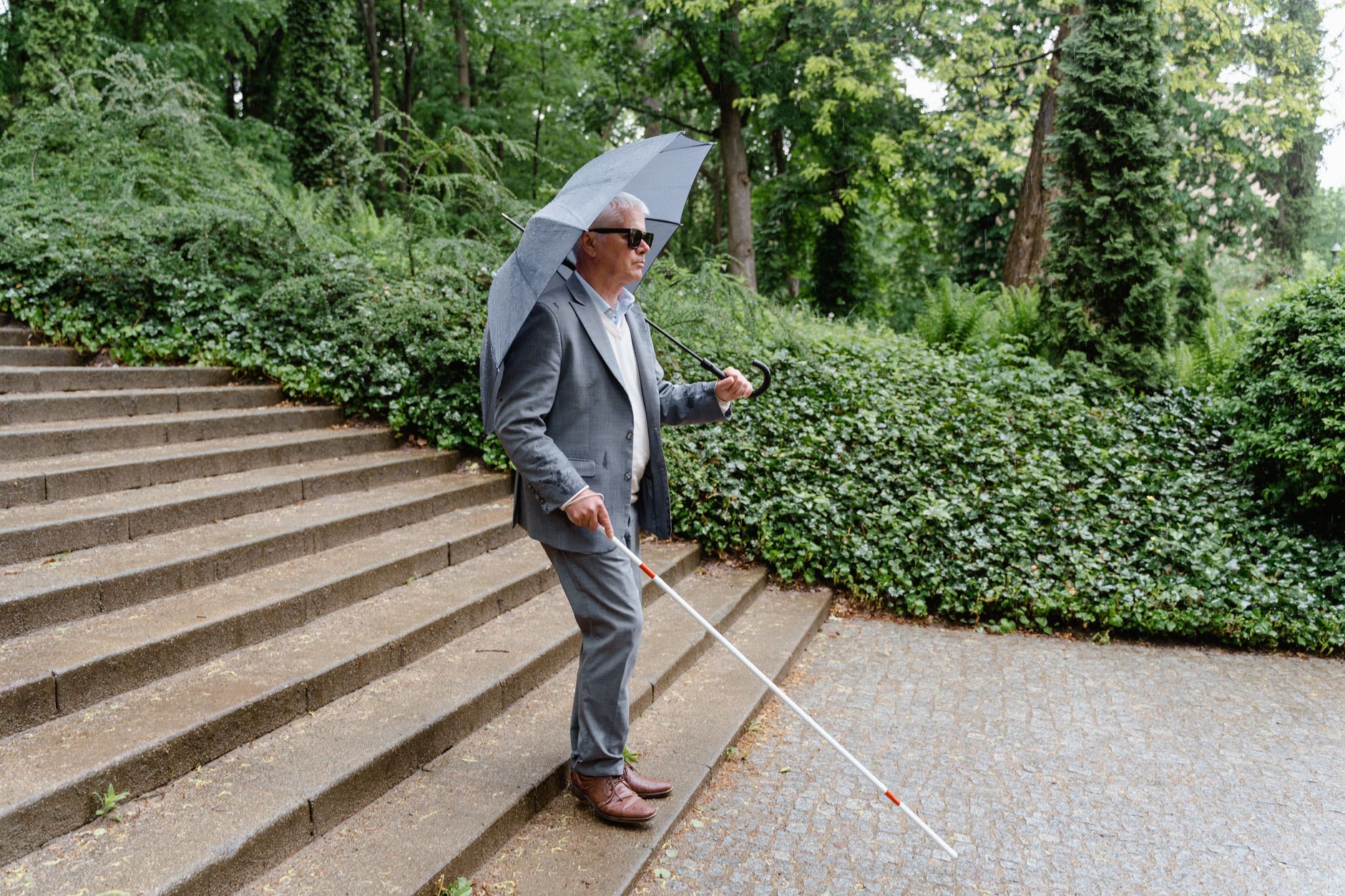
Yes, you can get disability benefits with blindness. The Social Security Administration (SSA) considers blindness a presumptive disability, meaning you may qualify for benefits without having to prove work history or medical details beyond your vision loss. If you are blind or legally blind—defined as having vision no better than 20/200 in your best eye with correction, or a visual field of 20 degrees or less—you can potentially access Social Security Disability Insurance (SSDI) or Supplemental Security Income (SSI) depending on your work and earnings history.
For example, a 58-year-old accountant who lost his vision to retinopathy over a two-year period was approved for SSDI within four months because blindness triggered the presumptive category. He continued to receive his full benefit while still doing consulting work—earning up to $1,550 per month (as of 2024) without losing benefits under the Substantial Gainful Activity (SGA) threshold. This immediate recognition means you don’t face the typical 5-7 month wait that other disability claimants endure.
Table of Contents
- How Is Blindness Classified for Disability Purposes?
- The Application Process and Presumptive Approval
- Social Security Disability Insurance (SSDI) Versus Supplemental Security Income (SSI)
- Work Incentives and the Plan to Achieve Self-Support (PASS)
- Common Complications and Gotchas in the Claims Process
- Medical and Vocational Evidence Requirements
- Planning for Long-Term Financial Security with Blindness
- Conclusion
How Is Blindness Classified for Disability Purposes?
blindness is one of the few conditions the SSA treats with automatic presumptive status, but the legal definition differs from how most people think of the word. Legal blindness is a clinical measure, not a description of whether you can see anything at all. You can have some usable vision and still be legally blind. The criterion is corrected vision of 20/200 or worse in your better eye, or a visual field of 20 degrees or narrower.
Your ophthalmologist or optometrist must document this in an eye exam. The SSA doesn’t require a specific diagnosis—they care only about the documented vision measurement. Whether your blindness comes from diabetic retinopathy, age-related macular degeneration, glaucoma, optic nerve damage, or congenital conditions, the disability status is the same. However, the condition must be expected to last at least 12 months or result in death. Someone recovering from temporary vision loss caused by surgery or medication would not qualify because the duration requirement wouldn’t be met.
The Application Process and Presumptive Approval
Applying for disability benefits with blindness is simpler than the standard process, but it still requires proper documentation. You file the same SSA-16 application for SSDI or SSI that any disability applicant would complete, but you should clearly state “blindness” as your primary impairment and attach recent eye exam results showing your visual acuity measurements and visual field tests. The exams must be from within the last 12 months to be considered current.
A major limitation is that many claimants fail to properly document their vision loss. Some assume that simply stating “I’m blind” in the application is enough, but the SSA will reject claims without objective test results from an ophthalmologist or optometrist. If you use a regular eye doctor or clinic without specialists in low vision care, you may need to see a specialist separately to get the specific measurements the SSA requires. Additionally, if you haven’t had an eye exam in over a year, the SSA will ask for a new one, which can delay the process if your regular doctor is booked or if you lack regular healthcare access.
Social Security Disability Insurance (SSDI) Versus Supplemental Security Income (SSI)
SSDI is based on your work history and social Security contributions. To qualify, you need 20 Social Security credits earned within the 10 years before your blindness began (though this requirement is different for those blind before age 22). Your monthly SSDI benefit is based on your lifetime earnings record, typically ranging from $623 to $3,822 as of 2024, depending on how much you earned while working. SSDI also grants you access to Medicare after two years on benefits, which is critical for ongoing vision care and related medical expenses.
SSI is a needs-based program available to people with low income and limited resources, regardless of work history. It provides a federal benefit of up to $943 per month (2024 rate) plus any state supplemental payments. SSI is often the route for younger people with blindness who haven’t worked enough to earn SSDI, or for those whose SSDI benefits are very low. However, SSI has strict asset limits—you can own no more than $2,000 in countable resources (for individuals) or $3,000 (for couples)—which can create a trap if you inherit money or receive a legal settlement. A person with blindness who received a $50,000 settlement from a car accident, for example, would immediately lose SSI eligibility until their assets dropped back below the limit, though they could be exempt from SSI and on SSDI instead if they had enough work history.
Work Incentives and the Plan to Achieve Self-Support (PASS)
The SSA recognizes that people with blindness may want to continue working or pursue vocational goals, and they offer several work incentives to encourage employment without immediately cutting off benefits. The Impairment Related Work Expenses (IRWE) program allows you to deduct work-related costs caused by your blindness—such as transportation to and from work, guide dog expenses, or assistive technology—from your earnings before the SSA counts them toward the SGA limit. A more powerful tool is the Plan to Achieve Self-Support (PASS), which allows you to set aside income and assets for a specific work goal without affecting your SSI eligibility.
For example, a person with blindness who wants to start a small business could set aside $30,000 of her annual income under a PASS plan while remaining on SSI, using that money to fund inventory, equipment, or training. The tradeoff is that PASS requires formal approval from the SSA and ongoing reporting, and the plan must be regularly updated. If you stop pursuing the work goal, the PASS ends and your income counting resumes.
📨 Get Free Medicare Guides Alerts
Free · No spam · Unsubscribe anytime
Common Complications and Gotchas in the Claims Process
One frequent problem is that the SSA may request eye exams from their own medical consultants even though you’ve provided recent exams. These Continuing Disability Reviews (CDRs) happen at least every three years for people under 55, and the SSA sometimes orders its own testing because examiners want to control the methodology or suspect fraud. If the SSA’s doctor disagrees with your ophthalmologist’s measurement of your visual field or visual acuity, the case can stall while the agencies argue. In rare cases, people have been found not disabled based on SSA-ordered exams that contradicted their treating physician’s findings, which then required an appeal.
Another trap is failing to report earnings or work activity. If you’re receiving benefits and you earn more than $1,550 per month (for 2024), you enter a trial work period, and continuing to earn above the SGA level will eventually cause your benefits to stop. Many people with blindness return to some form of work—remote work, part-time consulting, or self-employment—and don’t realize they’re breaking the SGA threshold. The SSA may demand repayment of benefits if they discover you were earning too much without reporting it, so keeping meticulous records of your work activity and earnings is essential.

Medical and Vocational Evidence Requirements
While blindness is presumptive, you still need medical evidence. The SSA will request authorizations to obtain records from your eye care providers, and those records must contain specific measurements: the eye chart result (visual acuity), the visual field test result, and the date of the most recent examination. If your doctors’ records are vague—for example, “patient reports blurred vision” without actual measurements—the claim will likely be denied pending more specific testing.
You may also face a vocational evaluation, where the SSA considers whether you can work despite your blindness given your age, education, and work history. Someone who is 62 years old with blindness and has worked as a laborer for 40 years will be found disabled more readily than a 35-year-old with blindness and advanced technical skills, because the SSA assumes vocational rehabilitation is more feasible for younger, more skilled workers. This is why age matters alongside blindness—blindness alone doesn’t guarantee approval if you’re young and have advanced education.
Planning for Long-Term Financial Security with Blindness
Receiving disability benefits is one piece of the financial puzzle, but it shouldn’t be your only retirement income. SSDI and SSI benefits are modest, and if you’re on SSI, the asset limits create a ceiling on how much wealth you can accumulate. A Supplemental Needs Trust (SNT) or “Special Needs Trust” can help you receive gifts and inheritances without losing SSI eligibility; a trustee manages the funds and can pay for expenses on your behalf that don’t trigger SSI disincentives.
If you’re working alongside your disability benefits, maximize your IRWE deductions and PASS plan to build additional income and savings. Some people with blindness transition from SSI to SSDI as they establish longer work histories, which removes the asset cap and provides better long-term security. The key is to think of your disability benefit as a baseline safety net, not as your complete financial future. By age 67, your SSDI benefit converts to a Social Security retirement benefit at the same amount, so you’re not left worse off by having claimed early due to blindness.
Conclusion
Blindness opens a direct pathway to disability benefits that most other conditions do not offer. The combination of presumptive status, relatively straightforward documentation requirements, and work incentives like IRWE and PASS makes it possible to secure a financial foundation while still pursuing employment or a business. However, the process requires accurate medical evidence, clear communication with the SSA about any earnings, and strategic planning to avoid common pitfalls like asset caps on SSI or unintended overage of the SGA threshold.
If you have blindness and no significant work history, start with an SSI application. If you’ve worked steadily, pursue SSDI, which offers better long-term security and eventual conversion to a retirement benefit. Either way, seek an SSDI or SSI advocate or attorney early in the process to ensure your claim is framed correctly and to represent you if the SSA denies your initial application. Blindness gives you legal leverage; using it effectively requires preparation.
You Might Also Like
- Getting Disability with Traumatic Brain Injury
- Getting Disability with Stroke
- Getting Disability with Spinal Cord Injury