
Monitoring and adjusting your investment strategy over time comes down to a handful of disciplined habits: tracking key economic indicators like inflation and interest rates, rebalancing your portfolio when allocations drift beyond a five-to-ten percentage point threshold, and conducting at least one thorough annual financial review that accounts for changes in your age, income, and retirement timeline. These are not dramatic moves. They are small, deliberate corrections that keep your portfolio aligned with your goals — the financial equivalent of checking your mirrors while driving rather than waiting until you hear a crash. Consider what happened in 2025.
The S&P 500 dropped almost 19% during the first half of the year before recovering to finish with a 17.9% total return. Investors who panicked and sold during the downturn locked in losses, while those who stayed the course and stuck with their strategy captured the full recovery. That single year illustrates why monitoring does not mean reacting to every piece of news — it means knowing when a genuine adjustment is warranted and when the right move is no move at all. This article walks through the specific indicators worth watching in 2026, how to rebalance without triggering unnecessary taxes, the tools available for tracking your portfolio, age-based allocation shifts, and simplification strategies that reduce the amount of oversight your investments actually need. Whether you are a decade from retirement or already drawing down, these practices apply.
Table of Contents
- What Economic Indicators Should You Track to Monitor Your Investment Strategy?
- How Often Should You Rebalance Your Portfolio — and When Does It Backfire?
- What the Recent Market Tells Us About Staying the Course
- Age-Based Allocation Adjustments That Actually Make Sense
- Tools and Benchmarks for Tracking Portfolio Performance
- Simplification Strategies That Reduce the Need for Constant Monitoring
- The Annual Financial Review That Ties It All Together
- Frequently Asked Questions
What Economic Indicators Should You Track to Monitor Your Investment Strategy?
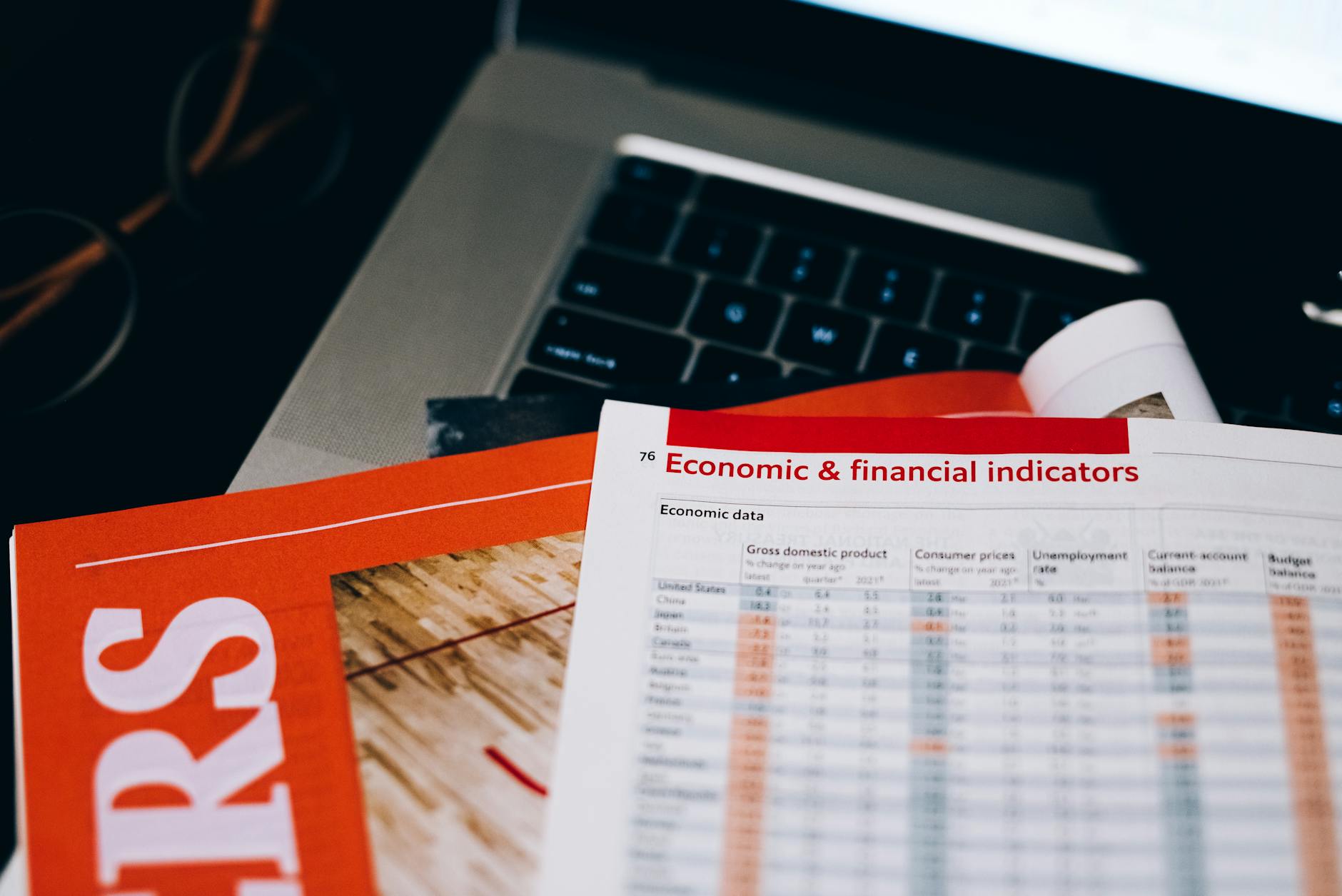
You do not need to follow every data release from Washington, but a short list of indicators will tell you most of what matters. CPI inflation stood at 2.4% year-over-year in February 2026, with a 0.3% monthly increase — still above the Federal Reserve’s 2% target. The median FOMC projection is for 2.4% inflation by the end of 2026, which means the purchasing power of your savings continues to erode at a pace that demands your portfolio earn a real return above that threshold. For retirees living on fixed income, this is not an abstract number. It is the reason your grocery bill feels heavier every quarter. Interest rates are the other side of this coin. The federal funds rate currently sits at 3.5% to 3.75%, held steady at the January 28, 2026 FOMC meeting.
Futures markets are pricing in at most two 0.25% rate cuts later this year, which would bring the range down modestly. What this means for your portfolio depends on your allocation. Higher rates benefit savers in money market funds and short-term bonds, but they put pressure on longer-duration bond prices and on equity valuations in rate-sensitive sectors like real estate and utilities. Beyond inflation and rates, two other readings deserve your attention. Weekly jobless claims from the Department of Labor provide a real-time snapshot of employment conditions and are a primary factor in Fed monetary policy decisions. GDP growth is equally informative: rising GDP signals economic expansion and generally supports equity returns, while shrinking GDP signals contraction and may warrant a more defensive posture. You do not need to trade on these numbers — you need to understand the environment your money is operating in so that your annual or semi-annual adjustments are informed rather than arbitrary.
How Often Should You Rebalance Your Portfolio — and When Does It Backfire?
The most common rebalancing advice is to do it once a year, often at tax time or at year-end. But research suggests a more detailed approach. Vanguard recommends rebalancing when your asset allocation drifts five to ten percentage points from your targets, rather than on a fixed calendar schedule. This threshold-based method means you only act when your portfolio has genuinely wandered off course, not just because a date on the calendar tells you to. In volatile markets, the case for more frequent attention gets stronger. Research published by Advisor Perspectives found that quarterly rebalancing outperformed annual rebalancing by 0.4% to 0.8% per year during periods of significant market swings. That may sound modest, but compounded over a twenty-year retirement savings horizon, it can translate into tens of thousands of dollars. However, there is a real risk of overdoing it.
T. Rowe Price warns that the more frequently you rebalance, the more you tend to sell outperformers and buy underperformers, which can harm long-term returns. Monthly rebalancing, for example, is almost always counterproductive. The optimal approach falls somewhere in the middle — not too frequent, not too infrequent. One critical warning: if you are rebalancing in a taxable brokerage account, every sale of an appreciated holding is a taxable event. Morningstar recommends concentrating rebalancing activity in tax-sheltered accounts like IRAs and 401(k)s, where selling appreciated securities incurs no immediate tax liability. If you must rebalance in a taxable account, consider directing new contributions toward underweight asset classes rather than selling overweight positions. This achieves the same result without generating a tax bill.
What the Recent Market Tells Us About Staying the Course
It is easy to talk about staying invested through volatility in the abstract. The 2025 market made it personal. The S&P 500 experienced an almost 19% decline during the first half of the year — the kind of drawdown that tests every investor’s nerve. And yet the index finished the year with a 17.9% total return. Over 75% of that gain, roughly 13.5 percentage points, was driven by actual earnings growth rather than speculative price-to-earnings expansion, according to analysis from First Trust and Carson Group. That distinction matters. Returns built on earnings are more durable than returns built on hype.
This came on the heels of two other strong years: the S&P 500 returned 26.3% in 2023 and 25.0% in 2024. Three consecutive years of double-digit returns can create a false sense of security and tempt investors to take on more risk than their plan calls for. The historical average tells a different story. From 1950 through 2024, the S&P 500 averaged roughly 9.3% annually. Planning around that long-term average, rather than the recent hot streak, is a more honest foundation for retirement projections. The practical takeaway is this: if your portfolio surged along with the market in 2023 through 2025, your equity allocation has almost certainly grown beyond your target. A portfolio that started 2023 at 60% stocks and 40% bonds could easily be sitting at 72% stocks today without a single trade. That kind of drift is exactly the scenario where rebalancing — selling some equity gains and moving them into bonds — brings your risk back in line with your plan.

Age-Based Allocation Adjustments That Actually Make Sense
The old rule of thumb — subtract your age from 100 to get your stock allocation — has fallen out of favor, but the principle behind it still holds. Your investment mix should shift as you move closer to the date you need the money. Morningstar’s guidance is straightforward: investors under 50 who are still actively saving for retirement should maintain a high equity allocation, because they have the time horizon to ride out downturns. Investors over 50 should consider adding more high-quality fixed income to reduce portfolio risk as retirement approaches. The tradeoff here is real and worth naming.
A 55-year-old who shifts from 80% equities to 60% equities will experience less dramatic portfolio swings, but will also capture less of the upside in strong market years like 2023 through 2025. Conversely, the retiree who keeps 80% in stocks at age 68 because “the market always comes back” faces sequence-of-returns risk — the danger that a major drawdown early in retirement forces withdrawals at depressed prices, permanently impairing the portfolio’s longevity. Neither extreme is correct for everyone. The right allocation depends on your other income sources, your withdrawal rate, and how much volatility you can tolerate without making emotional decisions. One practical approach is to think in terms of buckets: enough cash and short-term bonds to cover two to three years of living expenses, an intermediate allocation in diversified bonds for years three through seven, and a growth allocation in equities for the remainder. This structure lets you weather a prolonged downturn without selling stocks at a loss, because your near-term spending is already funded by safer assets.
Tools and Benchmarks for Tracking Portfolio Performance
Monitoring your portfolio does not require a Bloomberg terminal, but it does require more than glancing at your account balance once a quarter. Several tools have emerged that make meaningful analysis accessible to individual investors. Koyfin, for example, ranked number one in both Financial Analytics and Investment Portfolio Management on the G2 platform in Winter 2026, earning a 4.8 out of 5 rating. Platforms like these allow you to track performance against relevant benchmarks, analyze asset allocation drift, and visualize risk exposures without needing a finance degree. The benchmark you choose matters as much as the tool. The CFA Institute specifies that valid benchmarks should be unambiguous, investable, measurable, appropriate, reflective of current opinions, specified in advance, and accountable. Comparing your conservative retirement portfolio to the S&P 500 is not benchmarking — it is a recipe for dissatisfaction and bad decisions.
📨 Get Free Medicare Guides Alerts
Free · No spam · Unsubscribe anytime
A portfolio with 60% stocks and 40% bonds should be measured against a blended benchmark that reflects that same mix. For investors with private investments such as private equity or real estate funds, Cambridge Associates recommends benchmarking individual funds against a since-inception private index of the same strategy and vintage year. Comparing a 2019-vintage buyout fund to the S&P 500 is not an apples-to-apples exercise. One limitation worth noting: no tool can replace judgment. Automated alerts that your portfolio has drifted two percentage points are useful. Acting on every alert is not. Set your monitoring tools to flag meaningful deviations — the five-to-ten percentage point threshold discussed earlier — and ignore the noise between those signals.

Simplification Strategies That Reduce the Need for Constant Monitoring
Not every portfolio needs to be actively monitored and adjusted. In fact, some of the most effective strategies are designed specifically to minimize the amount of oversight required. Index funds are passive investments with no key-person risk and arguably require less monitoring than actively managed funds, according to Morningstar. You do not need to worry about a star manager leaving or a fund drifting from its stated strategy. The fund tracks the index, period.
Target-date funds take simplification a step further. These combine stocks and bonds in a single portfolio and automatically adjust the allocation over time as you approach your target retirement year. For investors who do not want to manage rebalancing themselves, target-date funds handle it internally. Dollar-cost averaging — investing the same amount on a recurring schedule regardless of market conditions — is another approach that reduces decision fatigue. By investing consistently, you naturally buy more shares when prices are low and fewer when prices are high, which can reduce your average cost basis and improve long-term results. The tradeoff with all of these approaches is that you sacrifice some degree of customization and control in exchange for lower maintenance and fewer opportunities to make costly emotional mistakes.
The Annual Financial Review That Ties It All Together
All of the monitoring, rebalancing, and allocation adjustments discussed above should culminate in at least one comprehensive annual review. Johnson Financial Group recommends starting by pulling bank statements, credit card records, and investment reports from the past year to understand your actual spending — not what you think you spent, but what you actually spent. This is the foundation of effective financial planning, because your withdrawal needs drive every other portfolio decision. Looking ahead through the rest of 2026, the environment calls for measured attention rather than dramatic action.
Inflation at 2.4% remains above the Fed’s target, the federal funds rate may come down modestly with one or two quarter-point cuts, and equity valuations reflect three years of strong returns. None of this demands a radical portfolio overhaul. It does demand that you know where you stand, that your allocation still matches your plan, and that you are not drifting into risk levels you did not choose. The investors who succeed over decades are not the ones who make the boldest moves. They are the ones who make small, informed adjustments consistently.
Frequently Asked Questions
How often should I check my investment portfolio?
A full review once or twice a year is sufficient for most investors, supplemented by threshold-based rebalancing when allocations drift five to ten percentage points from targets. Quarterly reviews may be appropriate during periods of unusual market volatility, but daily or weekly checking tends to encourage impulsive decisions rather than disciplined ones.
Should I rebalance my portfolio on a set schedule or only when allocations drift?
Threshold-based rebalancing — acting when your portfolio drifts beyond a set range — tends to outperform rigid calendar-based approaches. Quarterly rebalancing outperformed annual rebalancing by 0.4% to 0.8% per year in volatile markets, according to Advisor Perspectives research. However, T. Rowe Price cautions that rebalancing too frequently, such as monthly, can harm returns by systematically selling winners and buying laggards.
What is the best way to rebalance without paying unnecessary taxes?
Concentrate rebalancing activity in tax-sheltered accounts like IRAs and 401(k)s, where selling appreciated positions triggers no immediate tax liability. In taxable accounts, direct new contributions toward underweight asset classes rather than selling overweight positions, which achieves the same result without creating a taxable event.
How should I adjust my investment allocation as I get closer to retirement?
Investors under 50 generally benefit from maintaining a high equity allocation to capture long-term growth. After 50, gradually adding high-quality fixed income reduces portfolio risk. A bucket approach — cash for near-term expenses, bonds for intermediate needs, and equities for long-term growth — provides a practical framework for making this transition without abandoning growth entirely.
Are target-date funds a good option for hands-off investors?
Target-date funds automatically adjust their stock-to-bond ratio as your retirement date approaches, handling rebalancing internally. They are an effective choice for investors who prefer simplicity and want to avoid the behavioral pitfalls of managing their own allocation. The tradeoff is less customization — you cannot overweight or underweight specific sectors or tilt toward particular strategies.
You Might Also Like
- Simple Investment Tips That Can Help Grow Your Wealth Over Time
- Using Dollar-Cost Averaging as an Investment Strategy
- Investment Tips for Building Wealth Over Decades