
Military retirement benefits are a defined benefit pension system that provides regular monthly income to service members who meet specific service requirements, typically 20 years of active duty or equivalent service. Unlike civilian retirement plans where you must wait until age 59½ to withdraw funds penalty-free, military personnel can retire with full benefits as early as their early 40s if they accumulated the required years of service. For example, a Marine who enlisted at age 20 and served for 20 years could begin receiving retirement pay at age 40, receiving roughly 50% of their basic pay as a permanent monthly benefit, with increases for each additional year of service beyond 20 years.
These benefits exist because military service is inherently different from civilian work—it demands mobility, sacrifice, and willingness to risk life. The federal government recognizes this by offering a pension system that vests quickly and pays immediately upon retirement. However, military retirement benefits come with important constraints and considerations that differ dramatically from the retirement plans most Americans use.
Table of Contents
- How Does the Military Retirement Pay System Actually Work?
- Key Differences Between Active Duty and Reserve Military Retirement
- Understanding Cost-of-Living Adjustments and Inflation Protection
- Survivor Benefits and Family Considerations
- Taxes and Non-Taxable Elements of Military Retirement
- Coordination with Social Security and Other Income Sources
- Thrift Savings Plan and Additional Retirement Savings Strategies
- Conclusion
- Frequently Asked Questions
How Does the Military Retirement Pay System Actually Work?
The military retirement system operates as a defined benefit plan, meaning you receive a guaranteed monthly payment based on a formula rather than contributions you’ve made. The standard calculation is straightforward: multiply your final basic pay by your years of service and multiply by 2.5%. So if you retire after exactly 20 years with a final basic pay of $60,000, your monthly retirement pay would be $60,000 × 20 × 2.5% = $30,000 per year or $2,500 monthly. Add an additional year of service and that jumps to $36,000 yearly. This formula rewards longevity—each extra year of service increases your benefit by 2.5% of your final basic pay. The system applies only to your base pay, not to housing allowances, food allowances, special duty pay, or other supplemental compensation. This is a significant limitation.
If your actual take-home pay included $20,000 in allowances, your retirement calculation would exclude those entirely. Additionally, the military uses your “high-3” average—the highest average basic pay over any 36-month period—to calculate your retirement benefit. This means your final three years of service are critical to your retirement calculation, not just your final salary. Active duty members become eligible for this pension at 20 years of service, but members of the Reserve or National Guard follow different rules. Reserve members typically need 20 qualifying years, where a qualifying year is one in which you earn at least 50 retirement points. This means a part-time reservist might work 25 actual calendar years but only have 20 qualifying years. Reserve retirement doesn’t begin paying until age 60 (or age 50 if you served 20 years in an active status before 2008), not immediately upon retirement—a critical difference from active duty.

Key Differences Between Active Duty and Reserve Military Retirement
The most important distinction is timing. Active duty military members receive their pension immediately upon reaching 20 years of service at any age. A service member who enlisted at 18 could be collecting full retirement pay at 38 while still working a second career. Reserve and National Guard members, by contrast, must wait until age 60 (age 50 under grandfather rules for those who had 20 qualifying years before 2008) before receiving any payment, even though they’ve “retired” from active military duty. This creates a major retirement income gap for reservists—you’re retired from the military but not receiving military retirement income. Another critical difference involves the longevity bonus structure. Active duty members receive 2.5% per year of service, reaching 50% of base pay at 20 years and 62.5% at 25 years.
Reserve members use the same percentage formula but the payment delay creates a different lifecycle. For a reservist who retires at 42 after 20 qualifying years, they’ll wait 18 years until age 60 to receive any military retirement income. If they live to 85, they’ll collect for 25 years—a reasonable expectation, but those middle decades require alternative income sources. The final base pay calculation also affects reserves differently due to how “base pay” is calculated for part-time service. For active duty, it’s straightforward. For reserves, it’s the base pay you would have received as an active duty member with the same rank and time in service, calculated as if you’d been on active duty continuously. This is generally more favorable than calculating based on your actual drill pay, but the distinction matters for those with mixed active and reserve service.
Understanding Cost-of-Living Adjustments and Inflation Protection
Military retirement benefits include automatic annual cost-of-living adjustments (COLA) tied to the Consumer Price Index. This is a significant advantage compared to some private pension plans, which may offer no inflation adjustment or only partial adjustments. If you retire with a $2,500 monthly benefit and inflation averages 2.5% annually, your benefit will increase each year to maintain purchasing power. Over 30 years of retirement, COLA adjustments can more than double your actual payment in nominal dollars. However, COLA adjustments apply only to the portion of your income that comes from military retirement. If you later work federal civilian service and earn a federal pension, the COLA applies separately to each.
This creates a planning advantage—you’re not capped at one inflation adjustment; each income stream adjusts independently. For example, a military retiree who becomes a federal civilian employee can accumulate both a military pension with COLA and a separate federal civilian retirement with its own COLA. The COLA adjustment is applied in January of each year and is based on the Consumer Price Index for Urban Wage Earners and Clerical workers (CPI-W) from the previous September through August. While this is automatic and protects long-term retirees, there’s a built-in lag. Inflation that occurred September to August won’t affect your payment until January. During periods of rapid inflation like 2022–2023, this lag meant military retirees lost purchasing power for several months before the adjustment caught up.

Survivor Benefits and Family Considerations
The Survivor Benefit Plan (SBP) is an optional program available to military retirees that extends retirement income to spouses and eligible children if the retiree dies. Enrollment happens at retirement and the decision is largely irrevocable. If you don’t elect SBP at retirement, your spouse and children receive nothing from your military pension when you pass away. This is fundamentally different from Social Security, which provides survivor benefits automatically. SBP comes in several options. The standard version reduces your monthly retirement pay by roughly 6-7% to guarantee your surviving spouse receives 55% of your military retirement benefit for life.
There’s also a Children-Only option and an option to include children initially but remove them at a specific age. For a military retiree receiving $2,500 monthly, SBP might reduce their pay to around $2,350 and guarantee their surviving spouse $1,375 monthly indefinitely. That’s a permanent 5% pay cut to protect your family—a decision that deserves careful consideration with a financial planner. The election or non-election of SBP can’t be changed after the 90-day window following your retirement date, with only limited exceptions involving significant changes in family circumstances. This means you need to make an informed decision quickly. Many service members make this election without fully understanding the implications, either declining SBP to keep the full amount and leaving families vulnerable, or electing it without comparing the monthly cost against alternative insurance or savings strategies.
Taxes and Non-Taxable Elements of Military Retirement
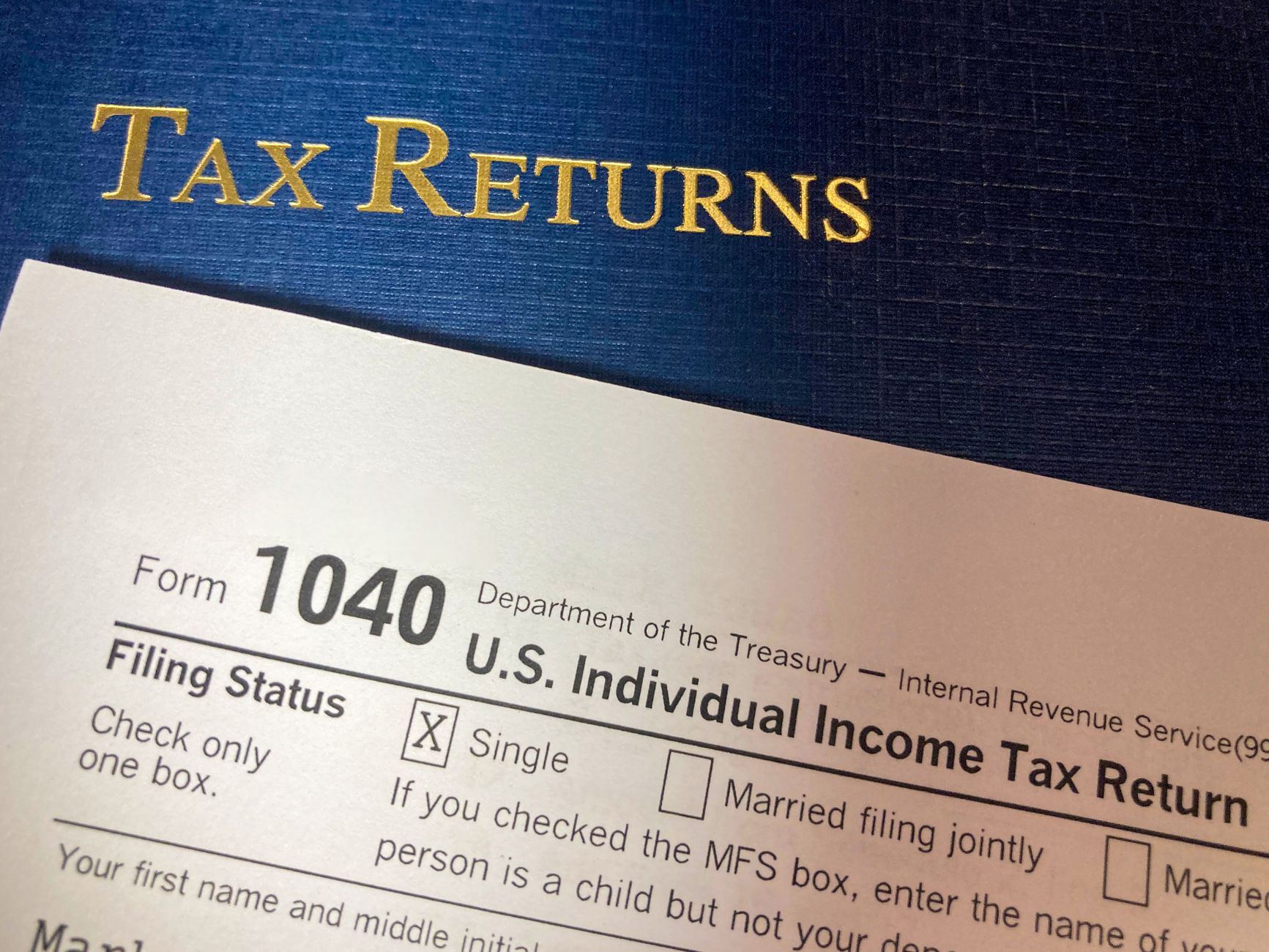
Military retirement income is subject to federal income tax just like wages. It’s reported on Form 1099-R and counts toward your adjusted gross income. This means a military retiree receiving $30,000 annually in retirement benefits will have federal income tax liability on that amount, though you can claim standard deductions and any applicable tax credits. Many retirees are surprised to learn their military retirement isn’t tax-free—a misconception that leads to tax bills larger than expected. However, one significant non-taxable benefit is the military housing allowance (BAH) or basic allowance for subsistence (BAS) if you receive them while on active duty. Once you retire, you don’t receive these allowances, so there’s nothing to tax.
But some states offer tax exemptions for military retirement income. As of 2024, seven states completely exclude military retirement from income tax: Florida, Illinois, Mississippi, Nevada, South Dakota, Tennessee, and Texas. Three additional states (North Carolina, Pennsylvania, and South Carolina) exclude military retirement from state income tax but tax other retirement income. This creates powerful incentives for military retirees to establish residency in these states before retirement if possible, potentially saving thousands annually in taxes over decades. A critical limitation: military members who are medically retired for disability may qualify for different tax treatment. Disability military retirement pay may be excluded from federal income tax up to the amount you would receive from the VA for the same disability. This is a substantial benefit that requires careful planning with a tax professional, as the rules are complex and require proper documentation to claim the exclusion.
Coordination with Social Security and Other Income Sources
Military retirees can claim Social Security at their regular eligibility age, but there’s an important coordination rule called the Windfall Elimination Provision (WEP). If you’re receiving a “Government Pension” like a military retirement—which qualifies because it wasn’t subject to Social Security tax withholding—your Social Security benefit may be permanently reduced. The reduction is roughly 50% of your government pension amount, up to a maximum reduction that increases each year. For a military retiree receiving $2,500 monthly in military retirement, the WEP might reduce Social Security benefits by $500 to $1,250 monthly, depending on the specific year of the reduction calculation.
📨 Get Free Medicare Guides Alerts
Free · No spam · Unsubscribe anytime
This isn’t a dual-benefit scenario where you choose one or the other. You receive both, but Social Security is reduced. The WEP has exceptions: it doesn’t apply if you had substantial earnings outside the government during the years you were earning government benefits, if you were a federal employee covered by Social Security for substantial periods, or if you reached age 62 before 2024 (or reached age 60 before 2020) with specific government service. Understanding whether WEP applies to your situation requires careful review of your military service timeline and civilian work history.
Thrift Savings Plan and Additional Retirement Savings Strategies
While military retirement pensions are guaranteed, they’re often insufficient as a sole retirement income source. The average military retiree at 20 years of service receives roughly half their final base pay, which might be $25,000–$35,000 annually depending on rank. Most retirees need additional income sources. This is where the Thrift Savings Plan (TSP) becomes critical. The TSP is the federal government’s 401(k)-style plan available to military members, and it offers low fees, employer matching, and tax-deferred growth that significantly outperforms most private 401(k) plans. Service members can contribute up to the annual 401(k) limit (currently $23,500 for 2024) to the TSP, and the Department of Defense matches contributions for military members.
For new service members starting after 2018, the military automatically contributes 1% of base pay even without employee contributions, and matches additional contributions at 50–100% up to 5% total contribution. A service member who maximizes TSP contributions throughout a 20-year career could accumulate $300,000–$500,000 or more, creating a significant supplemental retirement income source beyond the pension. Those who don’t maximize TSP contributions often find their pension insufficient and regret not saving more during their service years. Many military retirees also pursue federal civilian employment after military service, combining their military pension with federal civilian retirement benefits. This creates what’s sometimes called “double-dipping”—you’re receiving military retirement income while still earning federal wages and accruing federal retirement benefits. This is entirely legal and common, but it requires understanding how military service time counts toward federal civilian retirement (it doesn’t, unless specifically credited through a deposit) and managing the coordination between benefit systems.
Conclusion
Military retirement benefits represent one of the most valuable compensation elements federal employees receive, but they require understanding critical decisions made at the moment of retirement. The calculation is straightforward—2.5% of base pay per year of service—but the long-term implications are complex. Whether you elect Survivor Benefit Plan coverage, how you coordinate with Social Security, whether you maximize TSP contributions during your career, and where you establish residency for tax purposes all significantly impact your actual retirement income over decades.
Service members approaching retirement should work with a financial planner familiar with military-specific benefits, review their High-3 calculation, understand their WEP reduction if applicable, and make informed decisions about SBP and survivor protection. The military system is designed to encourage early retirement and second careers, but it works best when combined with additional savings, disciplined TSP contributions, and careful tax and income planning. Those who take time to understand these benefits before retiring typically increase their retirement income by thousands of dollars annually.
Frequently Asked Questions
Can I receive military retirement before age 20 years of service?
No, there’s no early retirement in the military pension system. You must complete at least 20 years of service to qualify for any retirement benefit, though medical retirement for disability is an exception.
How long does it take to receive my first military retirement payment?
For active duty retirees, payments typically begin the first of the month following your separation date. For reserve and National Guard members, payments don’t begin until age 60 (age 50 under certain grandfather provisions), even though you’re retired from service.
Do I lose my military health benefits if I retire?
No, military retirees remain eligible for TRICARE health insurance, though it’s not free. You pay monthly premiums, but the coverage is generally less expensive than private insurance. Family members can also be covered on your TRICARE plan.
What happens to my military retirement if I’m recalled to active duty?
If recalled to active duty, your military retirement payments stop for the duration of your active duty service. Payments resume when you separate again. Any military pay you receive while on active duty is separate from your retirement benefit.
Can I lose my military retirement benefits?
Federal law allows the military to reduce or forfeit retirement pay for serious crimes, particularly felonies involving moral turpitude or crimes related to military service. However, routine disciplinary issues or non-felony charges don’t result in loss of retirement benefits.
Does my military retirement count against me for Social Security or Medicare eligibility?
No, military retirement income doesn’t affect Social Security eligibility or Medicare enrollment, but it does trigger the Windfall Elimination Provision (WEP), which reduces your Social Security benefit if you receive a military government pension.
You Might Also Like
- Railroad Retirement Benefits
- 401k employer matching: Understanding average contributions and retirement plan benefits
- Retirement for Government Employees