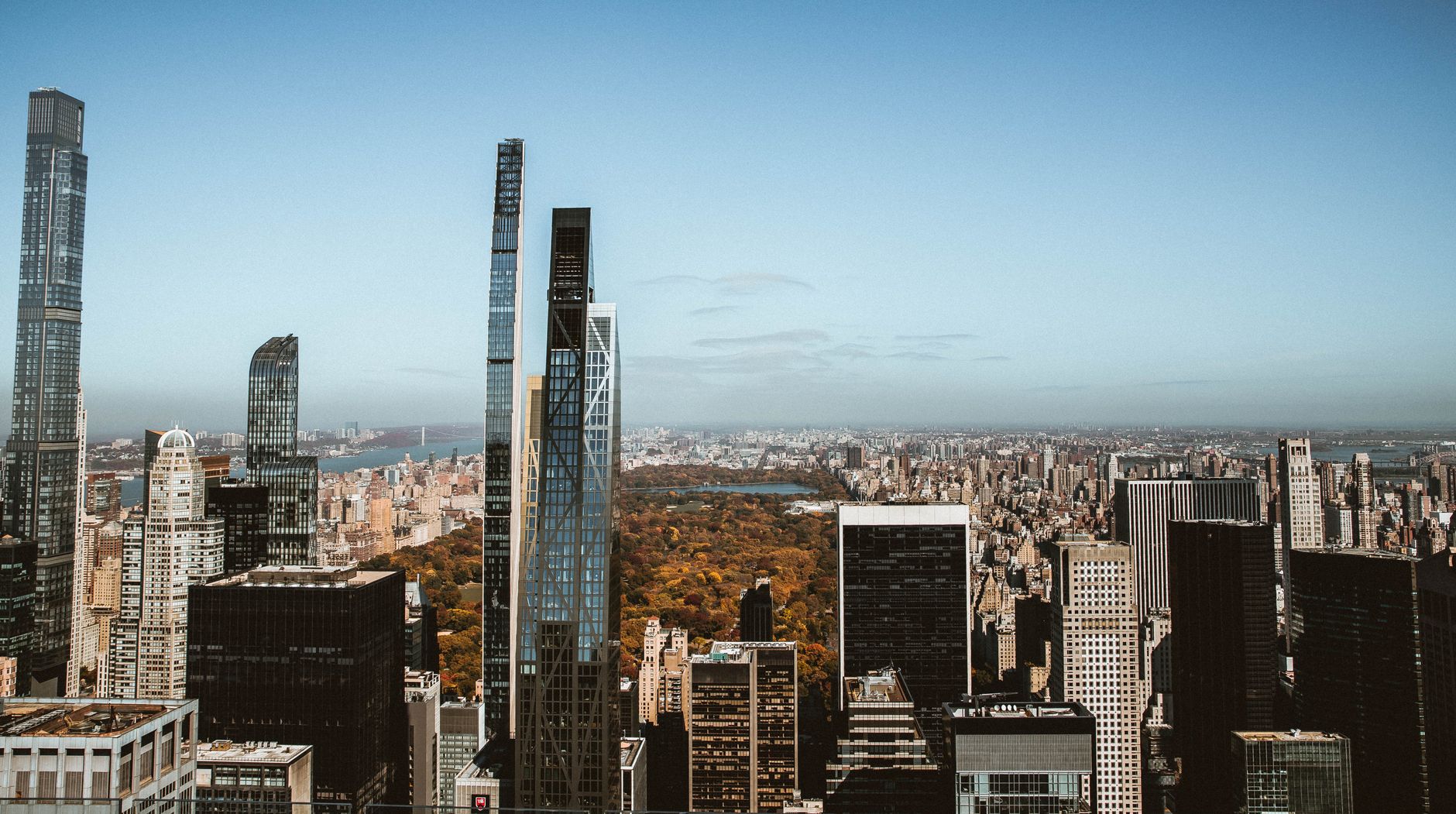
Retiring in New York presents a compelling but complicated choice. The state offers exceptional healthcare quality, world-class cultural amenities, and significant tax breaks on Social Security and pension income—benefits that attract thousands of retirees annually. However, New York ranks among the three most expensive states to retire in, with a cost of living 48% above the national average and housing costs 216% higher than the nation’s baseline. A comfortable retirement for two people in New York requires $85,000 to $97,000 annually, compared to substantially lower figures in other states. The reality is this: New York works well for retirees with substantial savings and a strong tolerance for harsh winters and urban density, but it presents real financial strain for those on fixed or modest incomes.
Consider a 65-year-old couple receiving $35,000 in combined Social Security and $15,000 from a pension. In New York, their Social Security is entirely tax-free under state law, and their first $20,000 in retirement income is excluded from state tax (potentially $40,000 if both spouses qualify). This same couple in a high-tax state might owe thousands more annually. Yet that same couple will pay $2,978 per month in average rent in New York City—far higher than the national median of $1,639—leaving little cushion for healthcare, utilities running 16% above average, or unexpected expenses. The decision ultimately hinges on three factors: your total retirement assets (New York requires over $1.5 million under the 4% withdrawal rule), your tolerance for cold winters and urban congestion, and whether you qualify for New York’s substantial tax exemptions on retirement income.
Table of Contents
- What Does Retirement Actually Cost in New York?
- The Tax Advantage That Actually Works for Most Retirees
- Healthcare Quality and the Costs of Staying Well
- Housing: From Unaffordable Market Rents to Subsidized Senior Communities
- The Harsh Reality of New York Winters and Urban Density
- Cultural Access and Lifestyle Amenities
- The Expanding Senior Population and Long-Term Outlook
- Conclusion
- Frequently Asked Questions
What Does Retirement Actually Cost in New York?
New York’s cost of living index stands at 148.2, meaning everyday expenses run nearly 50% higher than the national average, with costs rising another 2% in 2026 alone. This isn’t merely about rent. Utilities run 16% above the national average, and healthcare services cost 14% more than the U.S. median. Property taxes remain among the nation’s highest, and New York State adds its own income tax (4% to 10.9% depending on income level) on top of any federal obligations. For retirees on fixed incomes, these compounding costs create real budget pressure. The numbers translate to concrete minimums.
A couple aiming for financial security needs approximately $85,000 to $97,000 annually—enough to cover housing, food, transportation, healthcare, and modest entertainment. The bare survival figure sits just under $64,000 per year, a threshold that leaves little room for emergency care or quality-of-life spending. Working backward, the 4% withdrawal rule suggests you need over $1.5 million in savings to generate that $60,000 annual income safely. Many retirees arriving in New York with lower savings discover their nest egg shrinks faster than expected, forcing difficult choices between staying and relocating. New York City ranks third among U.S. News & World Report’s best places to retire (2025), yet this ranking assumes adequate financial resources. The ranking reflects genuine assets—proximity to top-tier medical centers, cultural institutions, and public transportation—but it does not account for retirees living paycheck-to-paycheck on limited pensions.

The Tax Advantage That Actually Works for Most Retirees
Here is New York’s most significant advantage for retirees: Social Security income is completely exempt from state income tax, period. No calculations, no phase-outs, no exceptions. If you receive $30,000 annually in Social Security, you owe zero New York State income tax on it. This alone saves the average retiree couple hundreds or thousands of dollars annually. Beyond Social Security, New York excludes the first $20,000 of retirement income annually for individuals age 59½ and older. This covers distributions from 401(k)s, IRAs, pension payments, and annuities. Married couples filing jointly can exclude up to $40,000 if both spouses qualify.
Additionally, government pensions—including those from New York State, local government, the federal government, or the military—are entirely exempt from state income tax, no matter the amount. This creates a significant tax advantage for retired public employees, teachers, police officers, and military veterans. The caveat: these exemptions only apply to state income tax. New York City residents and Yonkers residents pay an additional local income tax on top of the state rate. Moreover, New York maintains notably high sales and property taxes that offset some income tax savings. A pending proposal, Senate Bill 2571, would increase the retirement income exclusion to $30,000 for 2026 (and $60,000 for married couples), but as of now, the $20,000 figure remains law. For retirees whose retirement income exceeds the exemption threshold, rates climb to 10.9% for the highest earners, approaching levels in traditional high-tax states. The tax picture looks attractive only if your income stays within the exempted ranges or you qualify for government pension exclusions.
Healthcare Quality and the Costs of Staying Well
New York’s healthcare infrastructure ranks consistently among the nation’s best. The state boasts world-renowned medical centers, specialized treatment facilities, and ranked 10 out of 10 for healthcare quality according to U.S. News & World Report’s 2025 assessment. For serious or complex conditions, this access matters. A retiree facing cancer treatment, cardiac surgery, or neurological concerns has immediate access to specialists and teaching hospitals that rival anywhere in the country.
The problem emerges in cost. Healthcare services in New York average 14% higher than the national baseline—and this was before the 2026 cost increase. Health insurance premiums have risen faster in New York than nationally over the past 20 years, compressing retirees’ budgets. While Medicare covers a baseline of care, supplemental insurance, out-of-pocket maximums, dental, vision, and prescriptions can easily consume $300 to $500 monthly for a couple. For retirees with modest savings, these costs create a genuine squeeze, especially as they age and utilization increases. The paradox is real: New York offers excellent care but charges more for it.

Housing: From Unaffordable Market Rents to Subsidized Senior Communities
New York’s rental market is brutally expensive. The average rent in New York City sits at $2,978 per month, 82% higher than the national median, making apartment living alone consume 40% of income for retirees earning $85,000 annually. Median home prices in New York reach $605,200—the sixth highest in the country—placing homeownership out of reach for many. However, New York State and New York City have invested substantially in affordable senior housing. The New York Foundation for Senior Citizens operates nine buildings across Manhattan, Brooklyn, and Queens offering subsidized apartments for ages 65 and above living independently, with 30 to 40% of residents receiving on-site supportive services. The Mitchell-Lama Program provides lottery-based affordable housing for low-to-moderate income seniors.
The SCRIE (Senior Citizen Rent Increase Exemption) Program freezes rent for renters 62 and older in eligible NYC apartments, providing stability for longtime residents. In 2026, the Bethany Senior Terraces opened in Brooklyn with 57 affordable apartments for ages 55 and above, including 18 units with supportive services for residents requiring assistance. Access to these programs requires patience and persistence. Wait lists extend months or years, and eligibility depends on income thresholds, residency duration, and other factors. A retiree relocating to New York midway through retirement may find these programs inaccessible, forcing them into the private market at eye-watering rents. For those already established in New York or able to navigate the application process, these subsidized options provide genuine relief.
The Harsh Reality of New York Winters and Urban Density
New York’s winters are not a minor inconvenience for retirees—they are a documented concern that drives significant outmigration. Temperatures routinely drop below freezing, snow accumulates heavily, and ice creates genuine hazards for older adults with balance issues or joint problems. Heating costs spike, and outdoor activity becomes limited for months. For retirees with arthritis, respiratory issues, or general cold sensitivity, this creates a genuine quality-of-life problem that no tax break compensates for. New York City’s density—8+ million residents in roughly 300 square miles—creates perpetual congestion, noise, and pollution.
Traffic congestion makes errands time-consuming, air quality occasionally reaches concerning levels, and the constant pressure of crowds can feel overwhelming for retirees seeking peace and quiet. Public transportation mitigates some of this (and provides genuine advantages for those who cannot or prefer not to drive), but the baseline fact remains: New York is loud, crowded, and relentless. For retirees, these environmental factors carry psychological weight. Many who retire to New York expecting to embrace cultural vitality discover that winter confinement and urban intensity outweigh the advantages. The New York Foundation for Senior Citizens and similar organizations have noted increasing requests for relocation assistance and counseling among retirees struggling with the climate and density.

Cultural Access and Lifestyle Amenities
For those who thrive in urban environments, New York’s cultural landscape is unmatched. Broadway theaters, world-class museums (the Metropolitan Museum of Art, MoMA, the American Museum of Natural History), Michelin-starred restaurants, concert halls, and galleries exist nowhere else with such density and quality. A retiree passionate about theater, visual art, music, or dining can engage deeply with world-renowned institutions, often at senior discounts.
📨 Get Free Medicare Guides Alerts
Free · No spam · Unsubscribe anytime
Public libraries offer extensive programming, and Central Park—over 843 acres—provides access to nature within the city. This cultural richness is real but is not universally valued. Retirees prioritizing outdoor recreation, natural landscapes, or quieter social rhythms may find New York’s offerings irrelevant. The question is not whether New York offers lifestyle advantages—it does—but whether those specific advantages align with your priorities and temperament.
The Expanding Senior Population and Long-Term Outlook
New York’s population ages 65 and older is projected to increase 40% between 2010 and 2040, adding over 400,000 seniors to the state. This demographic shift creates both opportunity and challenge. Opportunity: the private market will develop more senior-focused housing and services; advocacy for elder services will intensify; and the state will likely expand programs addressing senior affordability.
Challenge: competition for affordable housing will intensify, services may become strained, and the state’s existing affordability crisis will deepen. The trajectory suggests that retiring in New York will remain an option for those with adequate resources but will grow increasingly difficult for middle-income and lower-income retirees. The state is actively addressing this through new development (like Bethany Senior Terraces) and proposed tax changes (like Senate Bill 2571), but housing production and tax policy typically lag population demand. For retirees considering a move in the next 5 to 10 years, sooner arrival may offer better access to affordable housing and programs than waiting.
Conclusion
Retiring in New York works, but only under specific conditions. You need substantial savings (over $1.5 million is realistic), a willingness to embrace urban living and cold winters, and ideally a background or current connection to the state that makes relocation feel natural rather than dislocating. The tax advantages on Social Security and qualified retirement income are genuine and substantial—potentially saving a couple thousands annually. The healthcare quality is exceptional. The cultural access is unrivaled. And for retirees already embedded in New York communities, the option to age in place carries immense value.
The practical next step is honest self-assessment. Calculate your anticipated annual retirement income and use New York’s tax calculator to estimate your actual state and local tax liability (not just the federal number). Survey housing costs in the specific neighborhoods where you might live. Consider whether winter weather and urban density align with your temperament, or whether you’re romanticizing New York based on visits rather than long-term residence. If you’re strongly drawn to New York, explore affordable housing programs early—don’t wait until you’ve already retired. And if you’re considering a move, have a backup plan for relocating to a lower-cost state if your savings deplete faster than expected. New York can be an excellent choice for retirement, but only if that choice is grounded in realistic numbers and genuine preference, not wishful thinking.
Frequently Asked Questions
Is Social Security taxed in New York State?
No. Social Security income is completely exempt from New York State income tax, regardless of the amount. This is one of New York’s strongest tax advantages for retirees.
How much do I need in savings to retire comfortably in New York?
Using the 4% withdrawal rule, you need over $1.5 million to generate $60,000 annually. For a more comfortable retirement ($85,000–$97,000 annually), most financial advisors recommend $2.1 to $2.4 million in investable assets.
Does the $20,000 retirement income exclusion apply if I live in New York City?
Yes, the $20,000 exclusion (or $40,000 for married couples filing jointly) applies statewide. However, NYC residents also pay an additional local income tax on top of the state tax, which reduces the overall benefit.
What affordable housing programs exist for seniors in New York?
The New York Foundation for Senior Citizens operates subsidized apartments, the Mitchell-Lama Program offers lottery-based affordable housing, the SCRIE Program freezes rent for eligible renters 62+, and the state operates subsidized developments. Wait lists are long, and eligibility varies by program.
How do harsh winters affect retirees in New York?
Winter weather is a documented concern. Temperatures drop well below freezing, snow is heavy, and ice creates hazards. Heating costs rise significantly, and limited outdoor activity can affect physical and mental health. This is a serious consideration if you have joint problems, arthritis, or cold sensitivity.
Is healthcare more expensive in New York than other states?
Yes. Healthcare services cost about 14% more than the national average, and health insurance premiums have risen faster in New York than nationally over the past 20 years. However, quality is exceptional, with New York ranked 10 out of 10 for healthcare by U.S. News & World Report.
You Might Also Like
- Retirement in Texas Pros and Cons
- Retirement in Florida Pros and Cons
- Retirement in California Pros and Cons