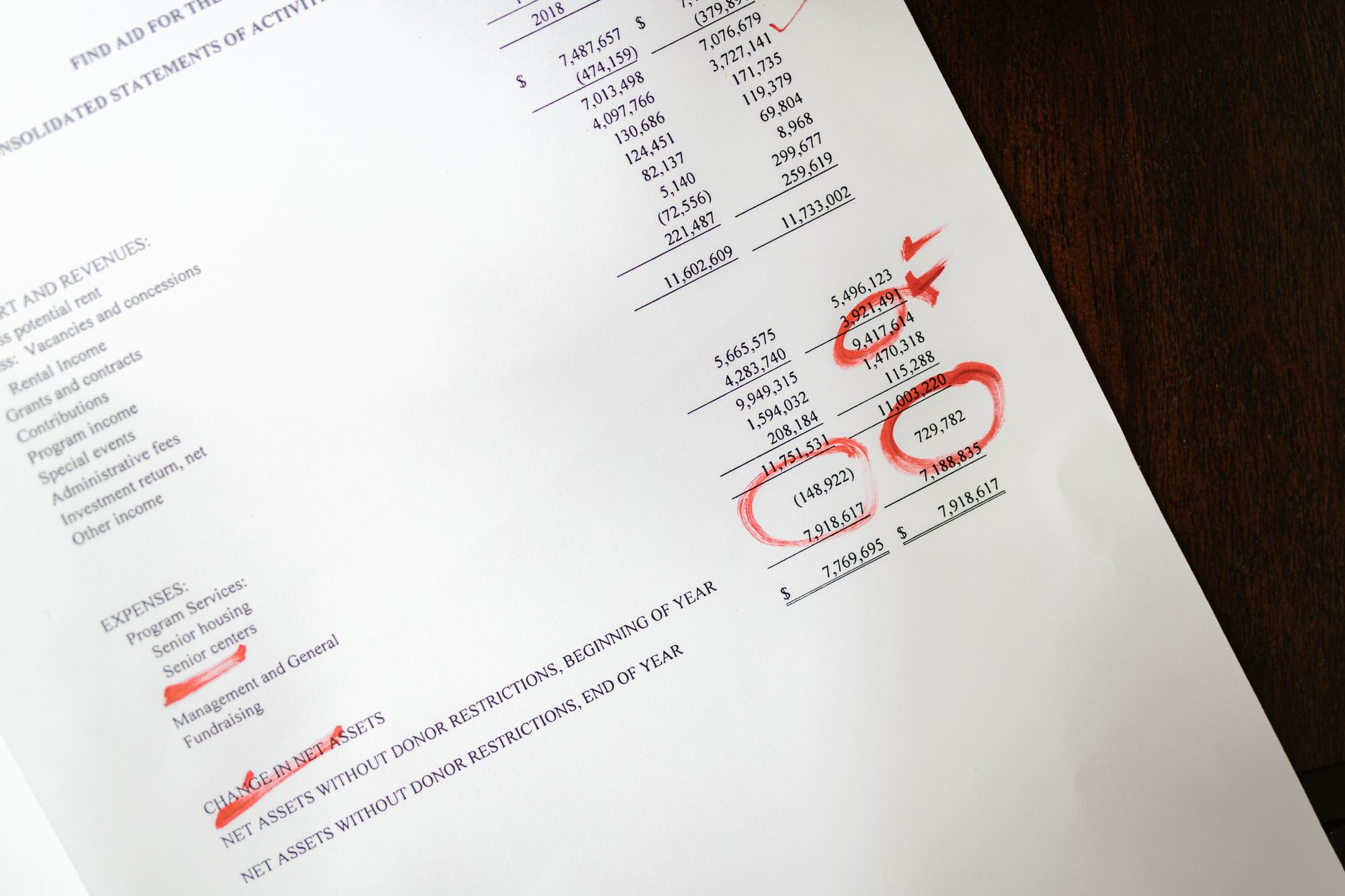
More than $2.1 trillion sits locked away in forgotten 401(k) accounts across America, and millions of former employees have no idea the money belongs to them. This staggering sum represents retirement savings that workers accumulated during their careers but left behind when changing jobs, and it now accounts for nearly one-quarter of all 401(k) assets in the United States. The problem has grown dramatically—the number of forgotten accounts has nearly doubled from 18.3 million in 2015 to 31.9 million today, meaning the average abandoned account now holds $66,691, money that could be funding someone’s retirement right now but instead sits dormant in old employer plans.
Consider Sarah, a 58-year-old marketing executive who changed jobs six times during her career. She contributed faithfully to each company’s 401(k), but once she left for a new position, she rarely thought about the old accounts. Nearly two decades later, she had accumulated almost $400,000 across five forgotten 401(k)s scattered across different plan administrators—money she didn’t know how to access or even locate. Her situation is far from unique; millions of Americans face the same problem: a fragmented retirement landscape where employer plans offer no central way to track accounts after employees depart.
Table of Contents
- How Did Trillions in Retirement Savings Become Forgotten?
- The Scale of the Problem and Its Hidden Costs
- What Happens to Abandoned Accounts While They Wait?
- The Department of Labor’s New Solution—The Lost and Found Database
- Common Obstacles to Recovering Forgotten Accounts
- The Growing Trend and Its Relationship to Job Mobility
- What’s Coming Next for Retirement Account Consolidation
- Conclusion
How Did Trillions in Retirement Savings Become Forgotten?
The mechanics of forgotten 401(k)s are straightforward but create a cascade effect across millions of lives. When a worker changes jobs, they typically have two options for their 401(k): roll it over to an IRA or to their new employer’s plan, or leave it with the previous employer. Many people choose to leave the money behind, intending to move it later but never following through. Others simply forget about these accounts altogether, especially after multiple job changes. As years pass and contact information changes, receiving statements becomes impossible, and accounts become invisible—not lost by the worker, but lost to the worker. The growth in forgotten accounts accelerated dramatically in recent years.
In 2023, employers left 3.5 million accounts abandoned. In 2024, that number jumped to 4 million. Industry analysts predict 4.2 million accounts will be forgotten in 2025 alone. This trend reflects both the modern job market’s increasing mobility and the fragmentation of the retirement savings system. Unlike countries with centralized pension tracking, the U.S. relies on individual employers and their administrators to manage plans, creating dozens of separate database silos with no unified system connecting them—until very recently.

The Scale of the Problem and Its Hidden Costs
The $2.1 trillion figure doesn’t fully capture the urgency of this issue because it obscures individual hardship. When someone forgets about a 401(k) account, they lose not just access to the principal but also years of potential growth. A $30,000 account abandoned at age 40 could grow to over $80,000 by retirement at age 67, assuming a modest 5% annual return. Multiply that across millions of accounts, and the opportunity cost becomes incalculable. Yet this figure also includes Federal Thrift Savings Plan (TSP) accounts—typically held by federal employees and retirees—which represent a growing portion of the problem.
Federal TSP accounts are expected to increase by 14% to 2.8 million from 2.4 million at the end of 2024, suggesting the forgotten account problem extends even into government retirement systems. The limitation of current statistics is important to acknowledge: the $2.1 trillion is measured in aggregate across millions of accounts, but some workers own multiple forgotten accounts. For instance, someone who worked for five companies over 25 years might have five separate 401(k)s scattered across different plan administrators, each with its own website, login credentials, and distribution rules. This fragmentation makes it harder for individuals to understand their true retirement position. A worker with $300,000 across six accounts might think they have $50,000 in each one, when in reality the accounts could have different values and investment allocations, requiring different strategies to consolidate.
What Happens to Abandoned Accounts While They Wait?
When a 401(k) account is abandoned, the money doesn’t disappear—it continues growing or shrinking based on its investment allocation. However, the account holder faces ongoing costs. Many plans continue charging administrative fees, investment management fees, and other charges to abandoned accounts. Some plans charge flat administrative fees annually, and if an account is small, these fees can erode the balance significantly over time.
A $10,000 account charged $200 in annual fees loses 2% per year to administration alone, a cost that adds up substantially over decades of abandonment. Some employers and administrators eventually transfer unclaimed property to state unclaimed property divisions after a period of inactivity, typically five to seven years. However, this transfer creates another problem: the money enters state custody without any clear indication of which specific 401(k) plan it came from or the former employee’s account identification. workers recovering these assets from the state must still prove ownership and explain the money’s origin, a process more complicated than reclaiming it directly from the plan. Additionally, any investment growth the account generated while with the employer plan effectively stops once it transfers to state unclaimed property—the funds are typically held in non-interest-bearing accounts or low-yield savings accounts.

The Department of Labor’s New Solution—The Lost and Found Database
On December 29, 2024, the U.S. Department of Labor launched the Retirement Savings Lost and Found Database, a free tool designed to help Americans locate forgotten accounts. This represented the first federal attempt to create a centralized searchable database of abandoned retirement accounts, a capability that has been absent from the American retirement system for decades. The database is managed by the Employee Benefits Security Administration (EBSA) and requires users to verify their identity through Login.gov before searching. Unlike private services that charge fees to help people locate accounts, the DOL database is completely free to use.
As of the end of 2025, approximately 29.5% of people who used the database successfully found a match, meaning nearly 70,000 out of 236,269 unique visitors located accounts they didn’t know they had. However, there’s an important limitation: the database currently includes information only for people age 65 and older. This restriction means millions of workers in their 50s and 40s cannot yet use the tool to locate their forgotten accounts, even though the money is rightfully theirs. The DOL has announced it will issue a Notice of Proposed Rulemaking in July 2025 to expand the database and likely broaden access to younger workers. This phased approach prioritizes retirees but leaves many workers in mid-career unable to access the tool that could consolidate their retirement savings.
📨 Get Free Medicare Guides Alerts
Free · No spam · Unsubscribe anytime
Common Obstacles to Recovering Forgotten Accounts
Finding a forgotten account is only the first step; recovering it presents its own challenges. Once someone locates an old 401(k), they must establish their identity with the plan administrator, a process that can take weeks or months. Plan administrators require recent identification documents, proof of employment, and account information that someone who left a job 10 or 15 years ago may not readily have. Some administrators are understaffed and slow to process requests, particularly for accounts they consider inactive or for individuals they haven’t communicated with in years. Another significant challenge emerges when combining multiple accounts into a single IRA: the rollover process requires understanding tax implications.
Some 401(k) plans contain pre-tax and after-tax contributions mixed together, requiring separate treatment. If an employee made after-tax contributions but took very few earnings out during employment, the pro-rata calculation to separate pre-tax and after-tax portions becomes complex. Making a mistake during rollover can result in unexpected tax bills. Additionally, some plans impose distribution restrictions or require employees to have reached age 59½ before allowing withdrawals, meaning a younger worker who finds a forgotten account may not be able to access it immediately even after locating it. These obstacles explain why many people, even after discovering forgotten accounts, delay or fail to reclaim them.

The Growing Trend and Its Relationship to Job Mobility
The explosion in forgotten 401(k)s directly correlates with changing employment patterns. The average American now changes jobs more frequently than previous generations, and younger workers especially show lower tenure with individual employers. In some industries, particularly technology and professional services, job-switching every two to three years is the norm. Each job change creates a new 401(k) account and increases the likelihood that a previous account will be forgotten. Some workers rationalize leaving old accounts behind, thinking the amounts are too small to bother with or assuming they’ll retrieve them later.
The reality is that small accounts compound into meaningful retirement assets over time. Federal employees face their own version of this problem with TSP accounts. When federal employees separate from service, those accounts remain in the TSP system but often become inactive. Since federal employment patterns have included lengthy careers, many separated federal employees accumulated sizable TSP balances before moving to private sector work. Unlike private 401(k)s that can more easily be rolled to IRAs, TSP accounts require specific rollover procedures, and some former employees don’t complete them, leaving substantial sums behind in federal custody.
What’s Coming Next for Retirement Account Consolidation
The DOL’s expansion of the Lost and Found Database represents a significant shift in federal retirement policy. When the database eventually covers Americans across all age ranges, it will transform the landscape for account recovery. However, expansion to younger age groups will also increase the administrative burden on plan administrators, who will face a surge of retrieval requests from workers wanting to consolidate accounts scattered across multiple employers.
Looking forward, there’s pressure within the industry to create more standardized account identification systems and to improve data sharing between plans and the federal registry. Some industry advocates propose requiring employers to register all active 401(k) plans with the federal database and to report abandoned accounts more systematically. A truly comprehensive solution might include automatic consolidation mechanisms that move unclaimed accounts to centralized accounts accessible through the federal system, rather than requiring each individual to hunt down scattered accounts. Until such systemic changes occur, the current situation persists: millions of workers with fragmented retirement savings and no simple way to consolidate them.
Conclusion
The $2.1 trillion in forgotten 401(k) accounts represents both a massive problem and a significant opportunity. For millions of Americans, that money is retirement security they’ve completely forgotten about—income that could fund years of retirement or provide crucial backup savings. The problem has grown steadily as the job market becomes more fluid and more workers accumulate accounts at multiple employers without proper consolidation.
The launch of the DOL’s Lost and Found Database in December 2024 finally provides a free, centralized tool to locate these accounts, though access remains limited to those 65 and older until the system expands. If you’ve worked at multiple employers during your career, there’s a reasonable chance you have forgotten accounts scattered somewhere. Visit the Department of Labor’s Retirement Savings Lost and Found Database at lostandfound.dol.gov to search for accounts in your name, and if you locate accounts, begin the process of consolidating them into a single, manageable location. Even small accounts compound significantly over time, and reclaiming them now could substantially improve your retirement readiness.
You Might Also Like
- He Was Laid Off at 61 and Spent $43,000 From His 401k Before Finding New Employment
- Warning: The Windfall Elimination Provision Has Reduced Benefits for 2 Million Public Employees
- $14,800 Per Year Is What Federal Employees Lose by Not Maximizing TSP Match and Catch-Up Combined