
Yes, the IRS charges exactly a 25% penalty on any required minimum distribution you fail to take, and most retirees have no idea this penalty exists until it’s too late. Under the SECURE 2.0 Act (effective for tax years after December 29, 2022), the IRS reduced the penalty from a punishing 50% to 25%—but make no mistake, that’s still a devastating hit to your retirement account. Consider this real scenario: A 75-year-old retiree with a $500,000 IRA forgets to withdraw her required $30,000 that year. She misses the December 31 deadline by just one day.
The IRS penalty is $7,500—25% of the amount she should have withdrawn. That’s $7,500 gone, paid directly to the federal government, simply because of a clerical oversight that took minutes to prevent. The broader problem is that roughly $1.7 billion in penalties get paid annually due to missed RMDs, suggesting millions of retirees are caught off guard by this rule every single year. Many people who’ve spent decades building retirement savings believe they have full control over when and how much to withdraw. The truth is harsher: once you reach age 73 (under the updated SECURE 2.0 rules), the IRS mandates specific withdrawals from most retirement accounts, and failure to comply triggers automatic penalties—with no exceptions for ignorance, illness, or circumstance.
Table of Contents
- What Is the 25% IRS Penalty on Missed RMDs and Why Did It Change?
- How the 25% Penalty Works and What Most People Overlook
- When RMD Requirements Begin and What Changed Under SECURE 2.0
- How to Reduce or Waive the 25% Penalty if You’ve Already Missed an RMD
- Form 5329 and the Correction Process
- Real-World Impact: How Missed RMDs Compound Over Time
- Planning Ahead: How to Ensure You Never Miss an RMD
- Conclusion
What Is the 25% IRS Penalty on Missed RMDs and Why Did It Change?
A required minimum distribution (RMD) is the minimum amount the IRS forces you to withdraw from your retirement account each year once you reach eligibility age. Before SECURE 2.0, the penalty for missing an RMD was 50%—meaning if you failed to withdraw $30,000, you’d owe $15,000 to the IRS. While that sounds harsh, the new 25% penalty under SECURE 2.0 still amounts to a significant loss. If the same retiree misses a $30,000 RMD, the penalty is now $7,500 instead of $15,000. On the surface, a 50% reduction looks like relief, but it’s important to understand what this change really means: Congress didn’t suddenly become lenient with retirees.
Instead, it recognized that the 50% penalty was so severe that it actually discouraged compliance—people who missed RMDs by accident often faced a choice between paying a massive penalty upfront or engaging a tax professional to fight it, which cost thousands in fees anyway. The penalty applies to the full amount you failed to withdraw, not just a portion of it. If your RMD for the year is $40,000 and you only withdraw $25,000, leaving $15,000 untouched, the 25% penalty applies to that entire $15,000 shortfall. That’s $3,750 owed to the IRS, on top of the income taxes you’ll eventually owe on the $40,000 distribution anyway. The penalty stacks with ordinary income tax—meaning you don’t get to offset it against other losses or deductions.
How the 25% Penalty Works and What Most People Overlook
The mechanics of the penalty are straightforward but often misunderstood. The IRS calculates your RMD using a formula based on your age and account balance, then checks whether you took that exact amount (or more) by December 31 of the same calendar year. If not, the penalty is applied automatically—you don’t have to apply for it or do anything to trigger it. Many retirees think the penalty is optional or that they can negotiate it away, but that’s a dangerous misconception. The IRS doesn’t penalize based on intent; it penalizes based on action (or lack thereof). You could have a completely legitimate reason for missing the deadline—illness, a lost statement, confusion about which accounts require RMDs—and the penalty applies regardless. One critical limitation to understand is that the penalty deadline is absolute.
December 31 at 11:59 p.m. is the cutoff. A distribution that posts to your account on January 2 of the following year doesn’t count for the prior year’s RMD. Many retirees have learned this the hard way after executing a withdrawal in early January, believing they had a grace period. There is no grace period for RMDs. The IRS has been clear and consistent on this point for decades. Your financial institution typically won’t prevent you from withdrawing late, and it may not automatically flag that you’re missing the deadline. You have to track it yourself.
When RMD Requirements Begin and What Changed Under SECURE 2.0
Under SECURE 2.0, retirees born on January 1, 1951, or later must begin taking RMDs at age 73—not age 72 as was previously required. This two-year extension was designed to give people more time to enjoy their savings, but it’s created confusion for those turning 72 in 2024 or 2025. If you turned 72 before 2023, you’re already in the RMD system and your first distribution deadline has passed. If you turned 72 in 2023 or later, you have until the April 1 of the year after you turn 73 to take your first RMD—that’s your “required beginning date.” This first RMD deadline is different from subsequent years; it’s not December 31 of the year you turn 73, but rather April 1 of the following year. Many people miss their first RMD entirely because they don’t realize the deadline is April 1 rather than December 31.
Imagine a retiree who turns 73 in September 2025. They have until April 1, 2026, to take their first RMD. Some assume they have all of 2026 to do it and don’t act until late December. If they miss April 1, the penalty applies to that first distribution, and it applies immediately—no warning, no cure period. The complexity here is a major source of non-compliance, and the IRS provides little handholding to retirees who miss these dates.

How to Reduce or Waive the 25% Penalty if You’ve Already Missed an RMD
If you’ve missed an RMD, you’re not automatically stuck paying the full 25% penalty. The IRS offers two pathways to reduce your liability: the correction method and the reasonable-cause waiver. The first option is simpler: if you catch your error within two years and immediately withdraw the missed RMD, the penalty drops from 25% to 10%. This is an automatic reduction—you don’t have to request it, and the IRS will apply it when you report the corrected distribution. A retiree who misses a $30,000 RMD but catches it and withdraws it within two years would pay $3,000 in penalties (10% of $30,000) instead of $7,500 (25% of $30,000). That’s a $4,500 savings for acting relatively quickly. The second option is more challenging but potentially more valuable: you can request a complete waiver of the penalty by demonstrating reasonable cause and filing Form 5329.
This form is where you formally report the missed RMD and request penalty relief. The reasonable-cause argument typically involves circumstances beyond your control—illness, death of a spouse, a clerical error by your financial institution, or significant cognitive decline that prevented you from managing your finances. The IRS doesn’t have a published list of what qualifies, so these cases are decided on an individual basis by the IRS office reviewing your Form 5329. If the IRS agrees that you had reasonable cause and that you’ve now corrected the problem, they may waive the entire 25% penalty, leaving you owing only the income tax on the distribution itself. The tradeoff with the reasonable-cause route is that it requires documentation, time, and often professional help. You’ll need to gather evidence of your circumstance, write an explanation, and potentially work with a tax professional or CPA to present your case convincingly. The process can take months, and there’s no guarantee the IRS will agree with you. Many retirees choose to simply pay the 10% reduced penalty rather than fight for a full waiver, calculating that the professional fees and stress aren’t worth the savings.
📨 Get Free Medicare Guides Alerts
Free · No spam · Unsubscribe anytime
Form 5329 and the Correction Process
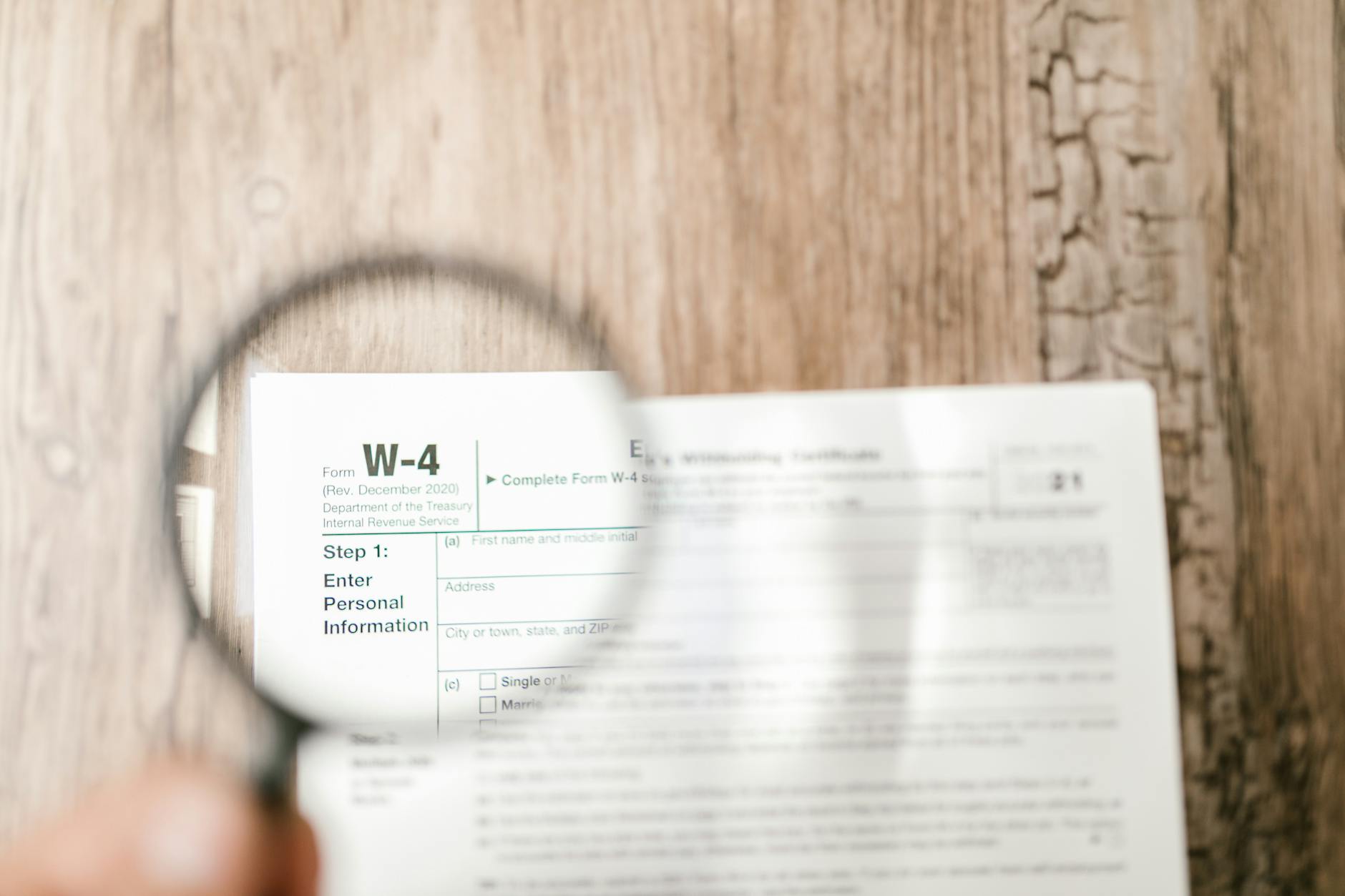
Form 5329 is the official IRS form used to report excess contributions, early distributions, and missed RMDs. If you’ve missed an RMD, you’re required to file Form 5329 with your tax return to report it. Many retirees who’ve missed RMDs don’t file Form 5329 at all, hoping the IRS won’t catch the error. This is a dangerous strategy. The IRS has access to all the 1099-R forms your financial institutions issue, and increasingly sophisticated matching systems flag accounts where no RMD was taken but should have been. Even if the IRS doesn’t catch it immediately, unfiled Form 5329s can trigger an audit years later, and the penalties and interest compound over time.
When you file Form 5329, you have the option to include a statement explaining your situation and requesting penalty reduction or waiver. This is your formal chance to make the reasonable-cause argument. Many tax professionals recommend including this statement proactively rather than waiting for the IRS to contact you. A well-written explanation can be the difference between a full penalty, a reduced penalty, or a waiver. The statement should be specific: explain what happened, when you discovered the error, what you’ve done to correct it, and why the error was truly beyond your control. Generic statements like “I forgot” or “I was confused” carry little weight.

Real-World Impact: How Missed RMDs Compound Over Time
The $1.7 billion in annual RMD penalties represents real dollars lost by real retirees, many of whom can’t afford the hit. Here’s a concrete example of how this compounds: A 74-year-old with a $800,000 IRA misses his first RMD of approximately $32,000 in 2025. He doesn’t realize his mistake until mid-2027, when his CPA prepares his taxes. By then, he owes a 25% penalty on that missed distribution ($8,000) plus income taxes on the $32,000 as if it had been withdrawn in 2025 (roughly $8,000-12,000 depending on his tax bracket).
On top of that, he’s now behind on his RMDs for 2026 and 2027, so he’s scrambling to catch up. His total out-of-pocket cost for one missed RMD could easily exceed $20,000 when you include the tax professional’s fees to unwind it all. For couples, the impact can be even steeper because both spouses are required to track and take their own RMDs (or the primary account holder’s RMD if they’re the designated beneficiary of a spousal account). It’s not uncommon for one spouse to handle finances and the other to be unaware of the RMD requirement until the penalty shows up on their joint return. Some couples have discovered, in their late 70s or early 80s, that they’ve missed RMDs for multiple years, creating a tax liability that forces them to liquidate more assets than they’d planned or even work with the IRS on payment arrangements.
Planning Ahead: How to Ensure You Never Miss an RMD
The best defense against RMD penalties is a simple system. Set a calendar reminder for October 1 each year to review your RMD requirement with your financial institution or tax advisor. By October, your year-end account statements aren’t final, but you have a good estimate of your balance, and you have three months to execute the withdrawal without rushing. Automated withdrawals are another excellent safeguard—many custodians (Fidelity, Vanguard, Charles Schwab, and others) allow you to set up standing orders for RMDs, where the money is transferred automatically on a date you specify each year. This removes the human element entirely and ensures consistency.
Looking forward, the changes under SECURE 2.0 suggest the IRS and Congress are trying to make the RMD system less punitive while still ensuring that tax-deferred retirement accounts eventually get taxed. The reduction from 50% to 25% penalties reflects a shift toward correcting errors rather than devastating financially. However, this doesn’t mean the rules will become more lenient. If anything, expect continued technical improvements to IRS matching systems that make it harder to accidentally skip an RMD without consequence. The best strategy remains the same: know your age threshold, know your deadline, and take action well before December 31 each year.
Conclusion
The IRS’s 25% penalty on missed RMDs is real, automatic, and applied to millions of retirees every year. While the reduction from 50% under SECURE 2.0 is a step toward fairness, it should not lull you into complacency. A single missed RMD can cost thousands of dollars in penalties, taxes, and professional fees, and the penalty applies regardless of whether the miss was accidental or intentional. The good news is that the penalty isn’t unavoidable: it can be reduced to 10% if corrected within two years, or waived entirely if reasonable cause is demonstrated on Form 5329. Your action steps are straightforward.
If you’re age 73 or older, confirm with your financial institution that your RMD is scheduled and will be executed by December 31 each year. If you’ve already missed an RMD, don’t delay in correcting it and filing Form 5329—waiting only increases the risk of audit and compounds your tax liability. Consider working with a CPA or tax advisor to review your RMD strategy and ensure you’re not leaving money on the table while also staying compliant with IRS rules. The complexity of RMDs is real, but so is the path to fixing them. Taking action now saves stress and thousands of dollars down the road.
You Might Also Like
- Pension Promise vs. Reality: What Most Americans Don’t Know Could Cost Them Thousands
- PBGC Insurance Gaps: What Most Americans Don’t Know Could Cost Them Thousands
- Early Withdrawal Penalties: What Most Americans Don’t Know Could Cost Them Thousands