
A woman in her late fifties faced an impossible choice when her golden retriever was diagnosed with advanced lymphoma. The recommended treatment protocol—chemotherapy, imaging, specialist consultations, and supportive care—would cost $22,000 over the next year. She had already begun the transition toward retirement, gradually reducing her work hours and relying more heavily on her nest egg. Instead of letting her beloved dog go without treatment, she withdrew $22,000 from her emergency fund that she had spent three decades building. Six months later, when her car needed a major transmission repair and a dental crown became necessary, she had no financial cushion. Both expenses went on credit cards at 18% interest. Her retirement timeline shifted from age 62 to age 67, a five-year delay that cost her an estimated $180,000 in lost retirement income and investment growth.
This scenario is not hypothetical. Pet ownership in America has become increasingly expensive, and many retirees and near-retirees face the emotional and financial trauma of depleting savings for animals they love. Unlike medical decisions for themselves, pet owners often lack the complex insurance options, payment plans, or even the cultural permission to say no to treatment. The result is that emergency funds—the financial buffer designed to protect retirement plans—get liquidated for situations that, however heartbreaking, were often foreseeable. The pet was aging. The risk was known. Yet most households have no formal strategy for managing it.
Table of Contents
- Can Pet Medical Emergencies Actually Derail Your Retirement Plan?
- Why Pet Cancer Treatment and Other Serious Diagnoses Cost So Much
- The Real Cost of Delaying Retirement to Pay for Pet Medical Bills
- How to Protect Your Retirement Savings from Pet Medical Bills (Without Abandoning Your Pet)
- Pet Insurance and Financial Safeguards: What Actually Works (And What Doesn’t)
- Setting Boundaries and Making Peace With Difficult Decisions
- Pet Ownership as a Retirement Planning Factor
- Conclusion
Can Pet Medical Emergencies Actually Derail Your Retirement Plan?
Yes. And the risk intensifies in your fifties and sixties, exactly when your financial flexibility is at its lowest. If you retire at 62 and need to tap your emergency reserves at 63 for a $15,000-$25,000 pet crisis, you have limited options for replacement income. You cannot quickly return to full-time work without disrupting your retirement transition. You cannot easily delay Social Security or pension benefits you have already claimed.
You have lost the ability to let investments grow in bear markets because you desperately needed the cash. The damage compounds silently—that $20,000 withdrawal from a diversified portfolio earning 6% annually costs you roughly $30,000 in lost growth over 15 years. Studies from the American Pet Products Association show that emergency pet care can exceed $3,000 per incident, with cancer treatments, orthopedic surgeries, and organ failures consistently running into five figures. A 55-year-old with a three-year-old German Shepherd faces not one emergency, but potentially several, across a 15-year retirement window. The financial hit from even two major incidents can shift your retirement date by years or force you to reduce spending throughout retirement, affecting housing, travel, and other quality-of-life factors.
Why Pet Cancer Treatment and Other Serious Diagnoses Cost So Much
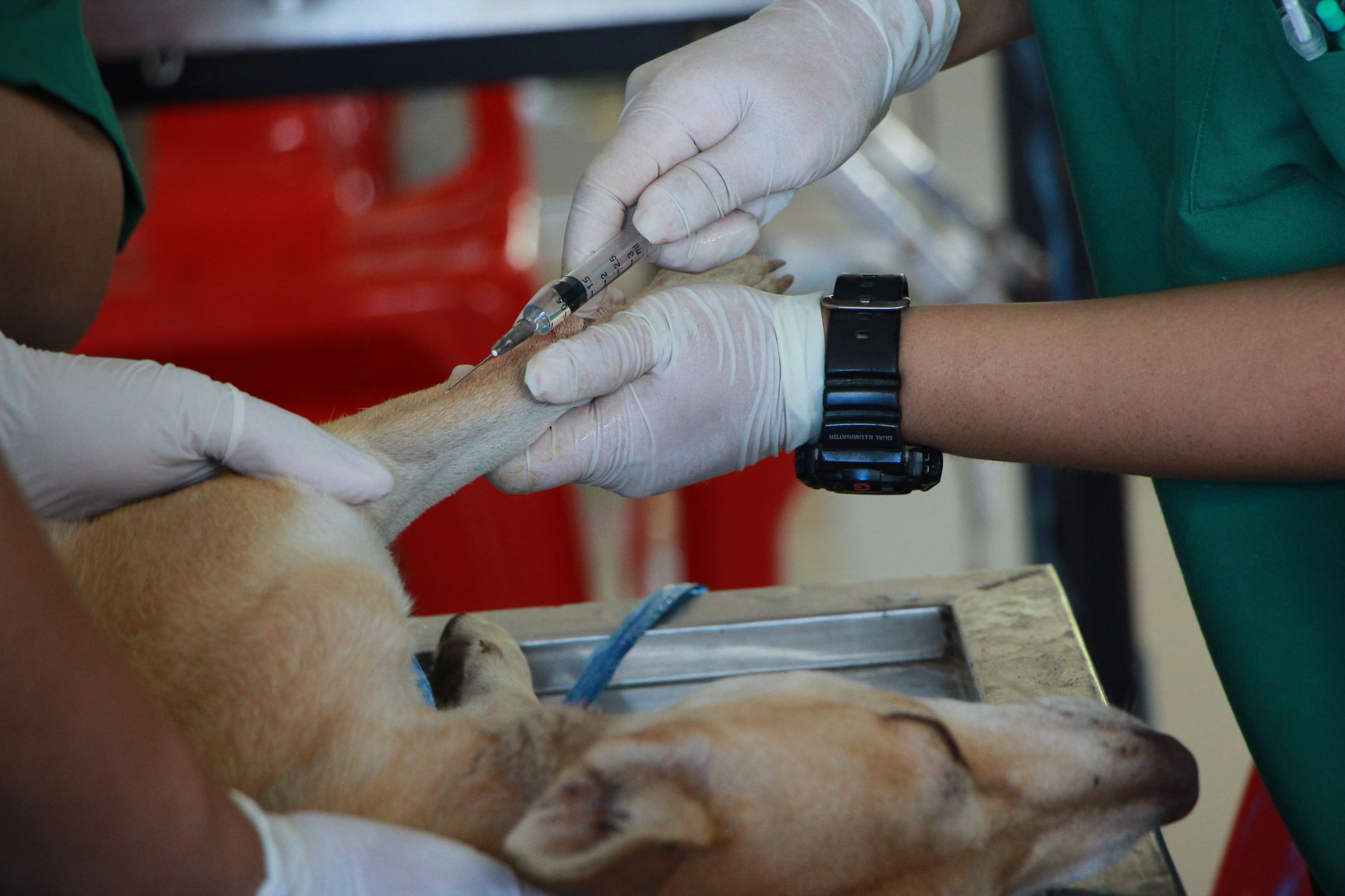
Modern veterinary oncology mirrors human cancer care in many ways: specialized expertise, advanced imaging (CT, MRI, ultrasound), pharmaceutical drugs that are expensive precisely because they work, and repeated follow-up care. A single chemotherapy protocol for a dog with lymphoma typically includes eight to twelve treatment sessions, each costing $1,500-$3,000. Add diagnostics before treatment ($2,000-$4,000), blood work and imaging throughout treatment ($1,000-$2,000), and emergency visits if side effects occur, and you reach $20,000-$30,000 quickly. The brutal truth is that these costs reflect real expertise and real medicine—but veterinary practices do not have the same insurance reimbursement structures that allow human hospitals to discount or absorb costs. You pay the full freight.
A critical limitation: veterinary oncology has no guarantee of success. A dog treated for lymphoma might live an additional 12-18 months with chemotherapy, or 6-8 weeks without it. There is no cure, only extension. A person considering this treatment faces the question many shy away from: is extending a pet’s life by months, in a setting where the pet may experience side effects from treatment, worth $22,000 and a five-year delay to retirement? A 58-year-old with $400,000 in retirement savings faces a fundamentally different calculation than someone with $1 million. The same expense can be manageable for one household and catastrophic for another—yet the emotional pull to treat is identical.
The Real Cost of Delaying Retirement to Pay for Pet Medical Bills
The explicit cost is the money spent. The hidden cost is time and opportunity. If your retirement savings are $400,000 and you withdraw $20,000 for a pet emergency at 62, you have only $380,000 generating returns. If you were planning to live on 4% of your portfolio annually ($16,000 in this example), you now have to live on $15,200 instead. For many people, this feels survivable—a 5% reduction in spending. But it is not. Retirement spending is often front-loaded: you travel more, pursue hobbies, and handle deferred home repairs in your sixties and seventies when you have the health and energy to enjoy them. A $800/year reduction in your sixties compounds into lifestyle compression throughout retirement.
More concretely, consider two scenarios: a 55-year-old with a German shepherd and a $500,000 retirement portfolio, expecting to retire at 62. Scenario A: no major pet emergency. She retires at 62, lives on $20,000/year (4% of her portfolio), and works part-time through 65 to manage a year of higher-than-expected spending. She builds a buffer. Scenario B: a major surgery at 60 costs $18,000, depleting her emergency fund. She reduces her portfolio withdrawal to $16,200/year (to rebuild the emergency fund), which requires her to keep working until 68 to hit her target retirement spending level. That six-year delay costs her 20,000+ hours of work life, stress, and the psychological damage of retirement moving further away. The pet lived the same amount of time in both scenarios. Her life quality degraded significantly in Scenario B.

How to Protect Your Retirement Savings from Pet Medical Bills (Without Abandoning Your Pet)
The most straightforward solution is to set aside a separate, designated pet emergency fund—distinct from both your general emergency fund and your retirement savings. If you own a pet in your fifties, allocate $10,000-$20,000 to this fund immediately, outside your retirement portfolio. You do not invest this in the stock market. You keep it in a high-yield savings account earning 4-5% annually. It serves one purpose: to absorb pet medical costs without forcing you to raid retirement savings. For a 55-year-old, this is 2-4 years of contributions if you set aside $250-$400 monthly. If your pet reaches 15 and never needs it, congratulations—it becomes part of your legacy or charitable giving.
If your pet needs it, you have already won: you protected your retirement plan. The second strategy is to purchase pet insurance while your pet is young and healthy. A 3-year-old dog costs $500-$1,000 annually for comprehensive coverage that includes accidents and illnesses (excluding pre-existing conditions). This is expensive and feels like waste if your pet never gets sick—until your pet does get sick. For a dog that lives to 12 or 13, you will have paid $4,500-$7,000 in premiums but potentially avoided a $25,000 emergency draw at age 62. The math is favorable if you buy early, while the pet is insurable. The trap is buying insurance for an aging pet with existing health issues, which most policies exclude. The solution must be implemented in your forties or early fifties, not when you are already near retirement.
📨 Get Free Medicare Guides Alerts
Free · No spam · Unsubscribe anytime
Pet Insurance and Financial Safeguards: What Actually Works (And What Doesn’t)
Pet insurance works best when purchased early, when the premium is low and the pet has no pre-existing conditions. A 4-year-old dog enrolled in a mid-tier plan costs roughly $600-$800 annually and typically covers 80% of accidents and illnesses after a deductible (usually $500-$1,000). The critical limitation: pet insurance does not cover pre-existing conditions, does not cover routine preventive care (vaccinations, cleanings, check-ups), and does not cover breeding-related issues or hereditary conditions unless you cover them before diagnosis. A dog prone to hip dysplasia cannot be insured for hip dysplasia after the problem appears. A dog with early kidney disease cannot claim future kidney-related treatment.
Payment plans and veterinary CareCredit (veterinary-specific credit lines) offer another safety net, but with a major warning: these plans typically charge 18-29% interest if not paid off within a promotional period (often 6 or 12 months). Using CareCredit to finance a $22,000 cancer treatment can result in $6,000-$8,000 in interest charges if you need longer than 12-18 months to repay. This is appropriate for a $3,000 emergency, less appropriate for a $22,000 bill. The best use of CareCredit is as a bridge: you charge the emergency, pay it off quickly from your emergency fund (or payment plan savings), and avoid the bulk of the interest. Using it as a permanent financing mechanism is how people end up taking high-interest debt into retirement.

Setting Boundaries and Making Peace With Difficult Decisions
One outcome of depleting your retirement fund for a pet is rarely discussed: resentment. After paying $22,000 and delaying retirement by five years, it is easy to feel angry at the pet, angry at yourself, or trapped by an emotional decision that rational-you would have declined. Some retirees never resolve this. They spend their sixties in forced work mode, and when they finally do retire, the joy is muted. The pet that was beloved becomes a reminder of lost time and security. The alternative is to set boundaries before crisis strikes.
This means deciding, in advance, what you would spend on pet medical care—and what you would not. If your number is $5,000, you tell your veterinarian that number. If the cancer treatment costs $22,000, your decision is made: palliative care (comfort measures) only, euthanasia when quality of life declines, saying goodbye rather than going into debt. This is emotionally brutal. But it is made clearly and rationally before grief and love cloud judgment. Many pet owners find that this conversation, though difficult, brings actual peace: your pet receives comfort care, your retirement remains intact, and you were not forced into a choice by urgency.
Pet Ownership as a Retirement Planning Factor
Most retirement planning guides do not mention pets. They should. If you own a dog or cat in your fifties, that animal has a reasonable probability of requiring substantial medical care before you die. A 4-year-old dog today will likely require age-related care—arthritis treatment, dental work, tumor removal, kidney or heart issues—in the next 10-15 years. If you plan to retire in 10 years, your pet’s health crisis and your retirement transition will overlap. This is not a maybe.
It is a statistical certainty for many pet owners. The forward-looking approach is to integrate pet costs into your retirement plan the same way you integrate healthcare costs, property taxes, and inflation. Estimate your pet’s likely lifespan, add a 20-30% buffer for unexpected illness, and set that money aside now. A 55-year-old with a 5-year-old Labrador should budget for $8,000-$15,000 in major veterinary costs across the dog’s remaining 8-10 years. That is $800-$1,500 annually, built into your retirement savings plan. If you do not spend it, it compounds. If you do spend it, it is already accounted for and your retirement plan does not break.
Conclusion
The woman who spent $22,000 on her dog’s cancer treatment made an emotionally understandable choice. She loved her dog. She could not watch it die without trying everything. The result was a five-year delay to retirement and five additional years of work stress in her late sixties, when her body was less resilient and her desire to rest was greatest. She is not unique. Thousands of retirees and near-retirees face this exact scenario.
The solution is not to tell people not to love their pets or not to treat them. The solution is to plan for pet medical costs as deliberately as you plan for everything else in retirement. Start now: open a dedicated pet emergency fund, buy pet insurance while your animal is young, or adjust your retirement timeline to account for likely veterinary costs. These actions take uncomfortable honesty—admitting that your beloved pet will age and likely need expensive care. But they protect what you have spent a lifetime building: the security to choose retirement on your terms, not by force. Five years of retirement spent in peace, with adequate savings and a dignified exit for your pet, is far more valuable than dragging treatment past the point of quality benefit simply because you have already spent money.
You Might Also Like
- She Paid a $250,000 Entry Fee to a Continuing Care Retirement Community That Closed Two Years Later
- Women in Retirement in 2026: The Numbers Are Worse Than You Think
- Warning: The Average Abandoned Retirement Account Loses 1.3% Annually to Administrative Fees