
The widow’s tax penalty is a financial burden that many surviving spouses face unexpectedly after their partner’s death. When a widow or widower inherits a lump-sum pension distribution or takes distributions from inherited retirement accounts, they can be pushed into a much higher federal tax bracket for a single year, resulting in a substantial tax bill that might not have occurred if their spouse were still living. For example, a widow who receives a $150,000 lump-sum pension distribution in addition to her own income might find herself in the 32% tax bracket, owing taxes at a rate far higher than she would face in subsequent years when spreading that income over time.
This penalty isn’t an additional tax created by law—it’s a consequence of how the tax system is structured around household income levels and filing status. The same income that two people filing jointly might have paid 12% tax on as a married couple can trigger 24% or 32% tax brackets when reported by a single filer. The widow’s tax penalty particularly affects surviving spouses during the transitional year of their spouse’s death and in the years immediately following, when they’re adjusting to their new financial reality.
Table of Contents
- How the Widow’s Tax Penalty Impacts Your Tax Bracket
- Inherited Retirement Accounts and Distributions
- The Loss of Joint Deduction and Credit Benefits
- Strategies to Minimize Tax Impact Through Distribution Planning
- The State Tax Penalty and Additional Complications
- Social Security and Medicare Premium Impacts
- Estate Planning and Forward-Looking Considerations
- Conclusion
- Frequently Asked Questions
How the Widow’s Tax Penalty Impacts Your Tax Bracket
The widow’s tax penalty emerges directly from how the IRS structures tax brackets differently for married filing jointly versus single filers. A married couple filing jointly in 2024 enjoys significantly wider tax brackets. For instance, the 22% tax bracket for married filing jointly extends up to $89,075, while for a single filer, the 22% bracket ends at $44,725. When a surviving spouse must file as single, the same income that once occupied a lower tax bracket can suddenly move into rates 10 percentage points higher.
Consider a real example: Tom and Mary had combined income of $120,000, filing jointly and paying roughly $11,000 in federal income tax. After Tom passes away and his final paycheck of $40,000 hits Mary’s account as a lump-sum distribution, she faces filing as a single with $160,000 in income for that year. Without strategic planning, Mary might owe $18,000 or more in federal taxes on that same household income simply because she’s now filing as a single person. The difference is the widow’s tax penalty—often $3,000 to $7,000 or more in a single year.
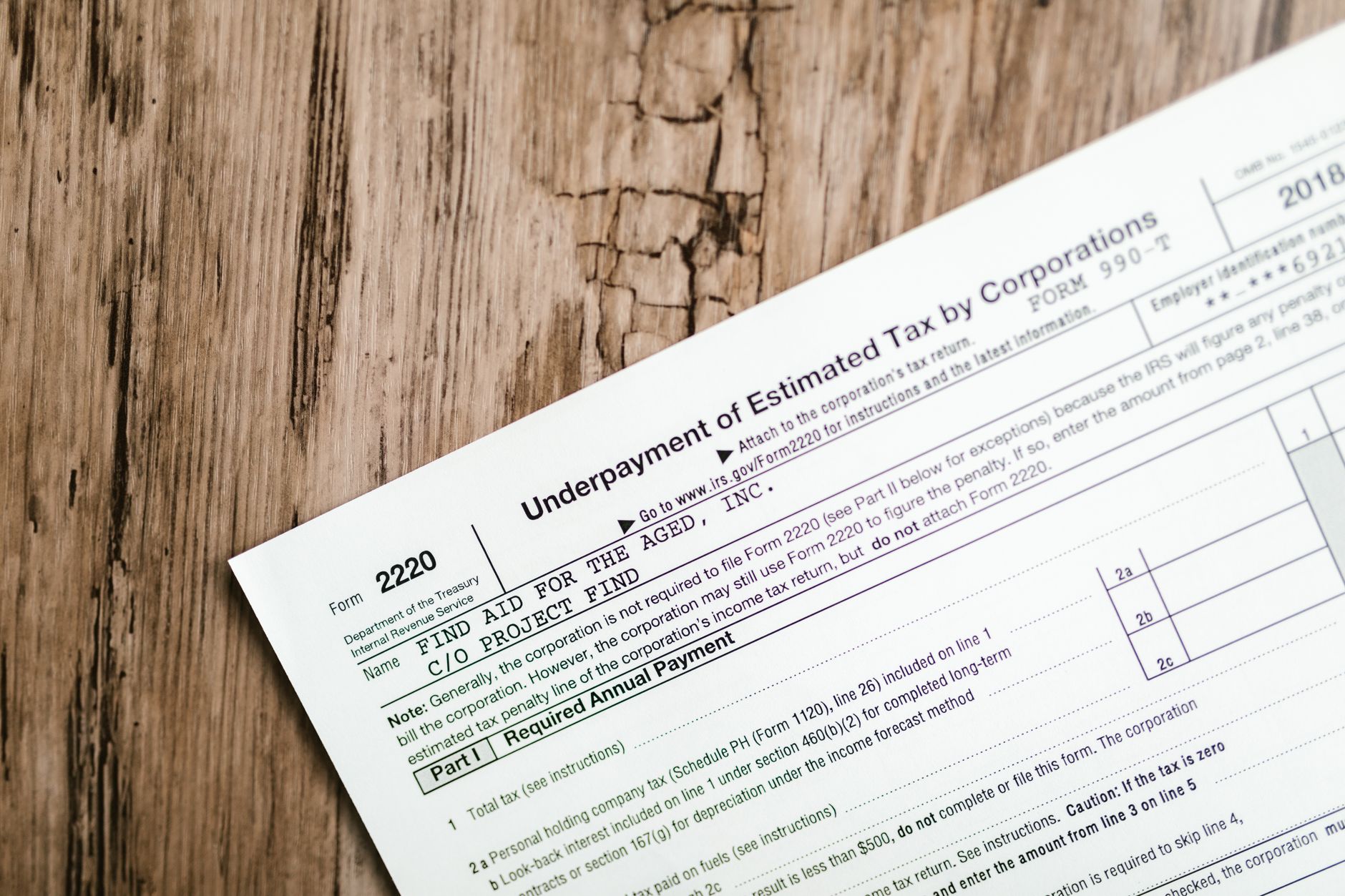
Inherited Retirement Accounts and Distributions
The widow’s tax penalty becomes especially acute when dealing with inherited Individual Retirement Accounts (IRAs) or inherited 401(k) plans. The SECURE Act of 2019 and SECURE 2.0 changed how these accounts must be treated, generally requiring non-spouse beneficiaries to drain accounts within 10 years. However, surviving spouses have more flexibility—they can treat an inherited IRA as their own, roll it into their personal IRA, or take distributions as needed.
Many surviving spouses don’t realize that taking a large distribution in a single year to “get it over with” can create significant tax consequences. A widow who inherits a $300,000 IRA and decides to withdraw it all in year one to settle estate obligations will pay ordinary income tax on the entire amount at her marginal rate, potentially moving her income into the 35% or 37% tax brackets. Had she instead stretched distributions across multiple years—taking $60,000 annually—her tax liability would be substantially lower, perhaps 24% instead of 35%. The limitation here is that the widow might have legitimate reasons for needing the cash immediately, such as funeral expenses, outstanding medical bills, or the need to pay estate taxes, leaving her with difficult choices between financial necessity and tax efficiency.
The Loss of Joint Deduction and Credit Benefits
Beyond the bracket shift, widows lose access to the more generous deductions and credits that apply to married filing jointly status. The standard deduction for a single filer in 2024 is $14,600, compared to $29,200 for married filing jointly—a difference of only 1% more per person, but a psychological and financial loss when combined with the bracket expansion. Additionally, certain credits like the Earned Income Tax Credit (EITC) have higher phase-out thresholds for married filers, and some credits available to married couples—like the credit for dependent care expenses—are more limited for single filers.
A widow supporting an elderly parent or adult child with disabilities may find that credits and deductions she could easily claim before are now subject to stricter phase-out rules. This compounds the widow’s tax penalty, particularly for widows in their 50s or 60s who may still have dependent relatives or significant deductible expenses. The cumulative effect of higher brackets, reduced deductions, and more restrictive credits can mean a widow’s effective tax rate on the same household income increases by 3 to 5 percentage points or more.

Strategies to Minimize Tax Impact Through Distribution Planning
The most effective strategy to reduce the widow’s tax penalty is to carefully time and spread retirement account distributions. Instead of taking a massive lump sum in the year of death, surviving spouses can work with a financial advisor and tax professional to calculate the optimal distribution schedule that keeps their annual income in a lower tax bracket. Some widows use a four-to-five-year distribution strategy, withdrawing enough each year to stay just below the threshold of the next tax bracket. Another powerful tool is bunching deductible expenses.
If a widow has flexibility on when to pay certain deductible expenses—like charitable donations, property taxes (up to the $10,000 cap), or medical expenses above 7.5% of adjusted gross income—she can strategically time these in high-income years to offset the widow’s tax penalty. A widow receiving a large inherited IRA distribution in year one might make a $25,000 charitable gift that year and reduce her other charitable giving in subsequent years. This “charitable bunching” strategy can save $6,000 to $8,000 in federal tax liability when combined with strategic distribution planning. The tradeoff is that this requires advance planning and coordination with multiple professionals—it’s not a strategy available to those facing an unexpected death without warning.
The State Tax Penalty and Additional Complications
For widows living in high-income-tax states like California, New York, or Massachusetts, the widow’s tax penalty extends beyond federal tax. These states often have their own tax brackets and filing status distinctions. A widow in California might face a 9.3% state income tax on that same $150,000 pension distribution that’s already being taxed at 24% federally, creating a combined marginal tax rate above 33%. Some states offer spousal exemptions or special provisions for inherited retirement accounts, but many do not.
A warning for widows who relocated after their spouse’s death: if you moved from a low-tax state to a high-tax state or vice versa, the year of transition can create unexpected complications. You may owe taxes in multiple states, and the portion of your inherited IRA distribution that is taxable in each state depends on where you physically resided when you received it. Additionally, some widows inherit IRAs titled in the deceased spouse’s name and held at the deceased’s primary residence state, complicating the state tax treatment of distributions. Professional guidance on multi-state issues is often essential to avoid overpaying state taxes.

Social Security and Medicare Premium Impacts
A less visible aspect of the widow’s tax penalty involves how the spike in income affects Social Security taxation and Medicare premiums. If a widow’s combined income (including her own Social Security benefits) exceeds certain thresholds, up to 85% of her Social Security benefits become taxable. This means a large retirement account distribution can push previously non-taxable Social Security income into the tax system, creating a cascading tax effect.
📨 Get Free Medicare Guides Alerts
Free · No spam · Unsubscribe anytime
Similarly, high-income recipients are subject to Net Investment Income Tax (NIIT) of 3.8% on net investment income when Modified Adjusted Gross Income exceeds $200,000 for single filers. A widow who receives a large inherited IRA distribution in a single year might unexpectedly owe NIIT on the entire distribution amount, adding another 3.8% to her tax liability. These provisions were designed to affect high-income earners, but they capture many widows during the transition year when their income spikes from inherited accounts. Careful distribution planning can avoid triggering these provisions entirely.
Estate Planning and Forward-Looking Considerations
The widow’s tax penalty should influence how people structure their estates and retirement accounts while still living. Married couples with substantial retirement assets should consider whether naming their spouse as beneficiary of all accounts, versus splitting accounts between spouse and other beneficiaries, creates opportunities for tax-efficient distributions. Some couples strategically use trusts or separate retirement accounts to allow more gradual distributions to a surviving spouse, reducing the likelihood of a severe tax year.
Looking forward, widows should view the widow’s tax penalty as a planning opportunity. The year after the penalty hits, their tax situation typically normalizes, and they may be in a position to harvest tax losses, accelerate charitable contributions, or make other tax-advantaged moves. Understanding that the spike is temporary—not a permanent increase in tax liability—can help widows make better long-term financial decisions despite the painful short-term impact. Working with a tax professional in the year following a spouse’s death often pays for itself many times over through the tax savings identified.
Conclusion
The widow’s tax penalty is a real and often substantial financial burden that affects surviving spouses when they inherit retirement accounts or receive lump-sum pension distributions. The penalty stems from the tax system’s structure: the same income taxed at lower rates for married couples filing jointly becomes taxed at significantly higher rates when reported by a single filer. Combined with the loss of certain deductions and credits, the widow’s tax penalty can add thousands of dollars in unexpected tax liability in the year of the spouse’s death or shortly thereafter.
The good news is that the widow’s tax penalty is largely preventable through careful planning. By spreading distributions across multiple years, coordinating the timing of deductible expenses, and understanding the state tax implications, widows can substantially reduce their tax burden. The key is to begin planning as soon as possible after a spouse’s death and to work with both a financial advisor and tax professional who understand the nuances of inherited accounts and surviving spouse taxation. Taking time to plan your distributions is one of the most valuable financial decisions you can make during an already difficult period.
Frequently Asked Questions
Can I avoid the widow’s tax penalty by not withdrawing inherited IRA money?
Partially. If you treat an inherited IRA as your own and don’t withdraw the money, you can defer taxes until you reach required minimum distribution age (73 as of 2023). However, the SECURE Act requires most beneficiaries to drain inherited accounts within 10 years, so eventually, you’ll face the tax. Planning when to take those distributions is the key to minimizing the penalty.
Is there a special tax rate for widows or surviving spouses?
No—there is no special lower tax rate for surviving spouses. However, the IRS does allow “Qualifying Widow(er)” filing status for two years after a spouse’s death, which uses the same tax brackets as married filing jointly. This filing status can help reduce the widow’s tax penalty in the year immediately after death.
What if I have to take a distribution right away for funeral and estate expenses?
Take what you need—the financial necessity comes first. However, once immediate expenses are covered, plan the remaining distributions strategically. Even starting the distribution strategy in year two can save significant taxes. If you took a large distribution in year one, you may be able to claim a casualty loss or charitable deduction to offset some of the tax burden.
Does the widow’s tax penalty affect state taxes too?
Yes, and the effect is often significant. High-income-tax states like California, New York, and Massachusetts impose their own tax brackets and may not offer the same filing status options as the federal government. A widow in California might face a combined federal and state marginal tax rate above 33% on inherited income.
Can I use the “step-up in basis” to reduce the widow’s tax penalty?
The step-up in basis applies to inherited assets like stocks, real estate, and mutual funds—not to retirement accounts like IRAs or 401(k)s. Retirement accounts pass to beneficiaries with the same tax-deferred status, so distributions are always taxable. However, non-retirement assets you inherit receive a “stepped-up” cost basis to their value at your spouse’s death, which can save capital gains taxes when you sell them.
What’s the difference between inheriting a spouse’s IRA versus a non-spouse’s IRA?
Spouses have unique advantages: you can treat an inherited IRA as your own, roll it into your personal IRA, and continue deferring taxes. Non-spouse beneficiaries must generally drain the account within 10 years under the SECURE Act. This flexibility for spouses is valuable but requires understanding your distribution options to avoid the widow’s tax penalty.