
Aging in place means staying in your own home and community as you grow older, rather than moving to a senior living facility or assisted care environment. To do this successfully, you need to make three core commitments: modify your home to be physically safe, arrange reliable healthcare and support services, and ensure your finances can sustain both living expenses and the care you’ll eventually need. A 78-year-old in Portland, Oregon, for example, invested $12,000 in bathroom grab bars, a walk-in shower, and bedroom rearrangement—costs far lower than moving to an assisted living facility, which would run $4,500 to $8,000 per month in her area. The reality is that most Americans prefer to age in place.
About 75 percent of older adults say they want to stay in their current homes as they age. But preference alone doesn’t make it possible. You must plan ahead, anticipate the physical and financial demands, and be honest about when professional care becomes necessary. Aging in place is not a one-time decision—it’s an evolving strategy that adapts as your health and circumstances change.
Table of Contents
- What Does Aging in Place Actually Require?
- The Hidden Financial Reality of Aging in Place
- Making Your Home Safe and Accessible
- Planning for Healthcare Access and In-Home Services
- Managing Cognitive Decline and When to Reassess Your Plan
- Managing Social Isolation While Aging in Place
- Reassessing Long-Term Care Insurance and Planning for Future Costs
- Conclusion
What Does Aging in Place Actually Require?
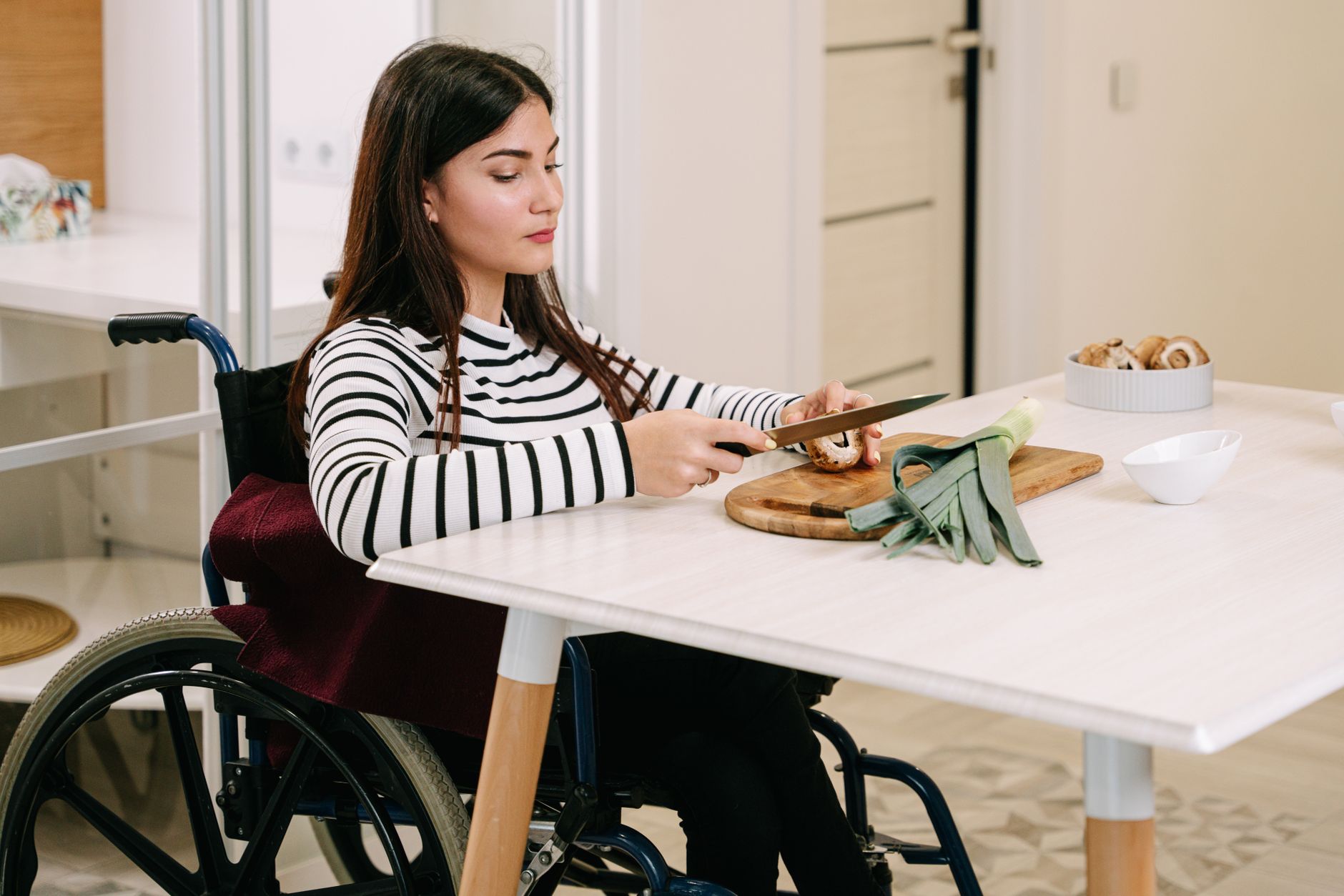
Aging in place requires four practical elements working together: a physically accessible home, a reliable network of family or paid caregivers, access to healthcare services, and enough financial resources to pay for all of it. Many people think aging in place means simply staying put, but it actually means creating the infrastructure to live safely and independently (or semi-independently) without constant supervision. Your home must accommodate mobility challenges. This might mean installing a ramp, widening doorways for a wheelchair, removing throw rugs that pose tripping hazards, or adding a first-floor bedroom and bathroom if stairs become difficult. A single person in Seattle spent $8,000 to move her bedroom and full bathroom downstairs; a neighbor paid $25,000 to add an accessible addition.
The costs vary widely based on your home’s layout and your specific needs. The key warning: these modifications become more expensive and complicated if you wait until a fall or health crisis forces rapid decisions. You lose the ability to compare contractors, plan carefully, and stay within budget. You also need a care plan—whether that’s family members who’ve committed to helping, a hired home health aide, regular visits from a nurse, or some combination. Many people assume adult children will provide this care, but adult children often live far away, work full-time, or have their own caregiving responsibilities. An honest conversation about who will help, and when, needs to happen before it becomes urgent.

The Hidden Financial Reality of Aging in Place
Aging in place is generally cheaper than moving to assisted living or a nursing home, but it’s rarely cheap. Home modifications, medical equipment, transportation, and paid care services add up quickly. The median cost of assisted living in the United States is around $54,000 per year; a nursing home averages $108,405 per year. Aging in place at home might cost $30,000 to $50,000 per year once you factor in home health aides, housecleaning, medical equipment, and maintenance—but this varies enormously based on where you live and how much care you need. The trap many people fall into is assuming Social Security and a modest pension will cover everything. They don’t.
A home health aide costs $18 to $25 per hour; if you need assistance for 20 hours per week, that’s $18,720 to $26,000 per year just for that one service. Add property taxes, home insurance, utilities, food, medications, and medical care, and your baseline expenses climb fast. Medicare covers some healthcare costs but not the full cost of long-term care, home modifications, or aides who are not medically skilled. medicaid will eventually help cover costs if your assets drop below a threshold—typically $2,000 to $3,000, depending on your state—but it comes with restrictions and requires you to spend down your savings first. A critical limitation: even if you plan carefully and save aggressively, catastrophic health events can overwhelm your budget. A stroke requiring intensive rehabilitation, advanced dementia requiring 24-hour monitoring, or a cancer diagnosis can force sudden, expensive care needs that no reasonable retirement budget anticipated. Long-term care insurance can help, but it’s expensive (often $1,500 to $3,500 per year), has strict underwriting, and many policies are designed to cover only a portion of costs.
Making Your Home Safe and Accessible
Physical safety is the foundation of aging in place. Falls are the leading cause of injury-related death for adults over 65, and most falls happen at home—on stairs, in bathrooms, in hallways, or while getting in and out of bed. Preventing falls requires deliberate changes to your environment. Start with the bathroom, where fall risk is highest. Install grab bars next to the toilet and in the shower (not towel bars, which won’t support your weight). Add non-slip flooring or apply non-slip strips to existing floors. Consider a walk-in shower or tub with a door instead of a high step-over edge. A shower seat or bench lets you sit while bathing, reducing the risk of dizziness or loss of balance. Some people upgrade to a walk-in bathtub with a door; these cost $3,000 to $15,000 installed, but they can be transformative if stairs are difficult.
One 82-year-old in Denver postponed a bathroom renovation, fell stepping out of her tub, broke her hip, and spent three months in rehabilitation—a financial and physical cost far higher than the renovation would have been. Stairs are the second major hazard. If you have mobility issues or balance problems, you might stair-lift installed (costs $2,500 to $5,000 for a straight staircase, more for curved stairs) or consolidate your living space to one floor. Handrails on both sides of stairs are standard. Outside, ensure your porch or entryway is well-lit, the steps are in good condition, and you have grab rails or a sturdy handrail to steady yourself as you enter and exit. Lighting matters more than many people realize. Dimly lit hallways and stairwells increase fall risk, especially at night. Install motion-sensor lights or keep pathway lighting on. Bedside lamps or clip-on lights that don’t require you to navigate a dark room to find a light switch reduce nighttime falls and injuries.
Planning for Healthcare Access and In-Home Services
As you age in place, healthcare becomes more frequent and complex. You’ll need reliable transportation to doctor appointments, prescriptions filled promptly, and medical equipment delivered and maintained. If driving becomes unsafe or impossible, you lose independence quickly unless you have a backup plan. Some communities offer transportation services for seniors; some adult children or friends can help; some people hire medical transportation or use ride-sharing services. Each option has costs and limitations. Consider proximity to healthcare facilities when deciding whether aging in place is realistic. If you live in a rural area an hour from the nearest hospital or specialist, emergencies become more dangerous. If you live in a dense city with multiple hospitals and clinics nearby, healthcare access is straightforward.
A person aging in place in rural Montana faces very different constraints than someone in Seattle or Chicago. Telehealth has expanded options, but many conditions still require in-person evaluation and treatment. Home health services range from simple assistance (housecleaning, yard work, meal preparation) to skilled nursing care (wound care, medication management, physical therapy). Home health aides are less regulated and less trained than nurses; they’re good for daily assistance but can’t perform medical tasks. Licensed home health nurses cost more but can manage medications, monitor health conditions, and coordinate with doctors. The comparison is important: an aide might cost $20 per hour, while a nurse might cost $50 per hour. If you need 40 hours per week of basic assistance, you’re looking at $40,000 per year for an aide or $100,000 for a nurse. Few people can afford the nurse option long-term without long-term care insurance or significant assets.
📨 Get Free Medicare Guides Alerts
Free · No spam · Unsubscribe anytime
Managing Cognitive Decline and When to Reassess Your Plan
One of the hardest aspects of aging in place is cognitive decline. Memory problems, confusion, and dementia make independent living increasingly risky. Forgetting to turn off the stove, leaving doors unlocked, getting lost in your own neighborhood, or wandering away from home are real dangers. Many people who successfully age in place with physical limitations eventually must move to supervised care because of cognitive decline, not physical frailty. If you or a family member is experiencing memory loss or confusion, honest reassessment is necessary. Smart home technology—medication reminders, door sensors, motion detectors, monitoring systems—can help, but there are limits.
A person with advanced dementia shouldn’t live alone, no matter how many sensors are installed. The warning here is critical: family members often rationalize that their aging parent is safe enough at home, when the reality is that unsupervised living creates genuine danger. Falls, medication errors, fires, and accidents increase dramatically with cognitive decline. You should periodically revisit your aging-in-place plan, ideally with input from healthcare providers, family, and a geriatric care manager if you can afford one. A geriatric care manager costs $100 to $200 per hour, but they provide expert assessment of whether your current setup is actually safe and sustainable. Many people discover, through these conversations, that aging in place is still viable but requires more support, or that the time has come to transition to assisted living. The limitation is that many people avoid these conversations until a crisis forces the decision.

Managing Social Isolation While Aging in Place
Aging in place can inadvertently lead to social isolation. Unlike residents of senior communities or assisted living facilities, people aging at home don’t have built-in social interaction. If mobility, transportation, or health challenges prevent going out, isolation can follow—with serious health consequences. Depression, cognitive decline, and worse health outcomes are documented in socially isolated older adults. Intentional efforts to maintain social connection become part of your aging-in-place plan.
This might mean regular visits from family, participation in senior centers or religious communities, volunteer activities, or intentional friendships. Technology helps—video calls, online classes, social media—but it doesn’t fully replace in-person connection. A 74-year-old in Albuquerque started a book club through her senior center as her mobility declined, which kept her socially engaged and gave her a reason to get out of the house twice a month. A neighbor relied entirely on video calls with distant children and became increasingly depressed, until her church started a weekly visit program. Both are aging in place, but one has built social resilience and the other struggled without it.
Reassessing Long-Term Care Insurance and Planning for Future Costs
Long-term care insurance is worth serious consideration if you have substantial assets and want to protect them from being consumed by care costs. A good long-term care policy covers home care, assisted living, and nursing home stays—typically with a daily benefit (often $150 to $300 per day) for a limited period (3 years to lifetime). The tradeoff is that premiums are expensive and increase over time, and many policies have strict conditions for payment. If you never need long-term care, the premiums are lost money. If you do need care, the policy can save hundreds of thousands of dollars.
Hybrid products—long-term care combined with life insurance or annuities—are emerging as alternatives. These products provide a death benefit or income stream if you don’t use the long-term care benefit, reducing the “lost money” concern. They’re more expensive upfront but offer more security. The challenge is that these products are complex, vary widely in quality, and require careful comparison. Speaking with a financial advisor who specializes in retirement planning is valuable; many financial advisors lack deep expertise in long-term care insurance and may not recommend it even when it makes sense for your situation.
Conclusion
Aging in place is achievable for many people, but it requires honest planning, adequate financial resources, and a willingness to adapt as your needs change. The first step is to assess your current home’s safety, identify potential care needs, and calculate realistic costs. The second step is to have frank conversations with family members about who will help and when, and to explore whether long-term care insurance or other financial strategies make sense for your situation.
The third step is to recognize that aging in place is not a permanent commitment—it’s a strategy that may work for years, or it may need to shift to assisted living or nursing care as circumstances evolve. Your goal should be autonomy and dignity for as long as possible, whether that happens at home or in a different setting. Starting the planning process in your late 50s or early 60s, rather than in a crisis at 80, gives you time to make deliberate choices, invest in home modifications thoughtfully, and arrange care networks that work. Aging in place works best not as an absolute destination, but as part of a flexible long-term plan that prioritizes your safety, financial stability, and quality of life at every stage.
You Might Also Like
- What Canadians Really Want: Workplace Pensions Top Salary Increase In New Survey
- Underground Gas Rupture Triggers Mass Evacuation Alert in Residential Zone
- Trust vs Will Decision