
Living arrangements have a direct and substantial impact on Supplemental Security Income (SSI) benefits because the Social Security Administration (SSA) counts the value of food, shelter, and utilities you receive as in-kind support and maintenance (ISM). If you live with family members who pay for your housing or meals, or if you reside in a group home where expenses are covered, SSA reduces your SSI payment—sometimes by hundreds of dollars per month.
For example, a 62-year-old who receives $943 in monthly SSI but moves in with an adult child may see that benefit cut by $315 (one-third of the federal benefit rate) simply because the adult child provides shelter, even if no money explicitly changes hands. The relationship between housing and SSI is particularly complex because shelter is the largest and most expensive need most people have, and SSA’s approach to calculating its value can dramatically reshape your available income. Understanding how your living situation affects your benefit amount is critical for anyone receiving or planning to receive SSI, and poor planning in this area can cost thousands of dollars annually.
Table of Contents
- How Does SSA Count In-Kind Support and Maintenance From Your Living Situation?
- The Complete ISM Calculation and How Shelter Costs Are Allocated
- Living in Group Homes, Care Facilities, and Congregate Settings
- The Trade-Off Between Independence and Benefit Reduction
- Common Mistakes in Living Arrangements That Cost Recipients Thousands
- Strategic Planning: How to Minimize ISM While Maintaining Housing Security
- State Variations and the Future of SSI Living Arrangement Rules
- Conclusion
How Does SSA Count In-Kind Support and Maintenance From Your Living Situation?
The SSA uses a specific rule called the “one-third reduction rule” to penalize recipients who receive shelter or food support from others without paying for it themselves. When someone living in your household provides food or shelter without receiving payment in return, SSA counts this as income to you. Specifically, if you receive in-kind support and maintenance, your ssi benefit is reduced by up to one-third of the federal benefit rate (FBR), which in 2024 was $943 monthly—meaning a potential $315 reduction depending on your state’s supplementary payment. Consider a real scenario: Susan, age 58, receives SSI and lives with her adult daughter. The daughter pays the $1,200 monthly rent on their shared apartment and buys groceries.
Susan pays nothing for housing or food, even though she consumes these items. SSA counts this arrangement as Susan receiving $1,200 in in-kind support (the actual shelter cost), and applies the one-third reduction rule, cutting her SSI by $315. If Susan and her daughter had instead agreed that Susan would pay her “fair share” of $600 for rent and food—even if the daughter still covered the actual costs—SSA would only count $600 as in-kind support, and the reduction would be lower. The limitation here is that this rule applies regardless of whether you actually have a choice in the matter. A disabled adult living with aging parents out of necessity faces the same reduction as someone who chose the arrangement for convenience.

The Complete ISM Calculation and How Shelter Costs Are Allocated
ISM calculations become more complex when multiple people share a household. ssa does not simply divide total housing costs by the number of people living there; instead, it uses a “pro rata share” method based on the actual cost of providing shelter to the SSI recipient specifically. When you live in a house with family members, SSA estimates what portion of the total shelter cost (rent or mortgage, property taxes, utilities, homeowner’s insurance, or maintenance) reasonably applies to you. In practice, this means SSA might allocate $400 of a $1,500 monthly mortgage to you if you occupy one of four bedrooms and share common areas.
If parents or other household members pay this $400 and you pay nothing, that $400 counts as in-kind support and triggers the one-third reduction. However, if you pay $200 of your own money toward the mortgage or rent, then only the remaining $200 (what others paid for you) counts as ISM, potentially reducing the penalty. This creates a powerful incentive to contribute something to household expenses, even if you cannot cover the full cost. A critical limitation is that SSA’s allocation method can vary between field offices, and what one office considers a fair share may differ from another. Additionally, if your living situation involves paying rent to the household head (such as paying your parents rent), SSA may view this differently than simply contributing to shared family expenses, sometimes excluding it from the ISM calculation entirely if it is a genuine market-rate arrangement.
Living in Group Homes, Care Facilities, and Congregate Settings
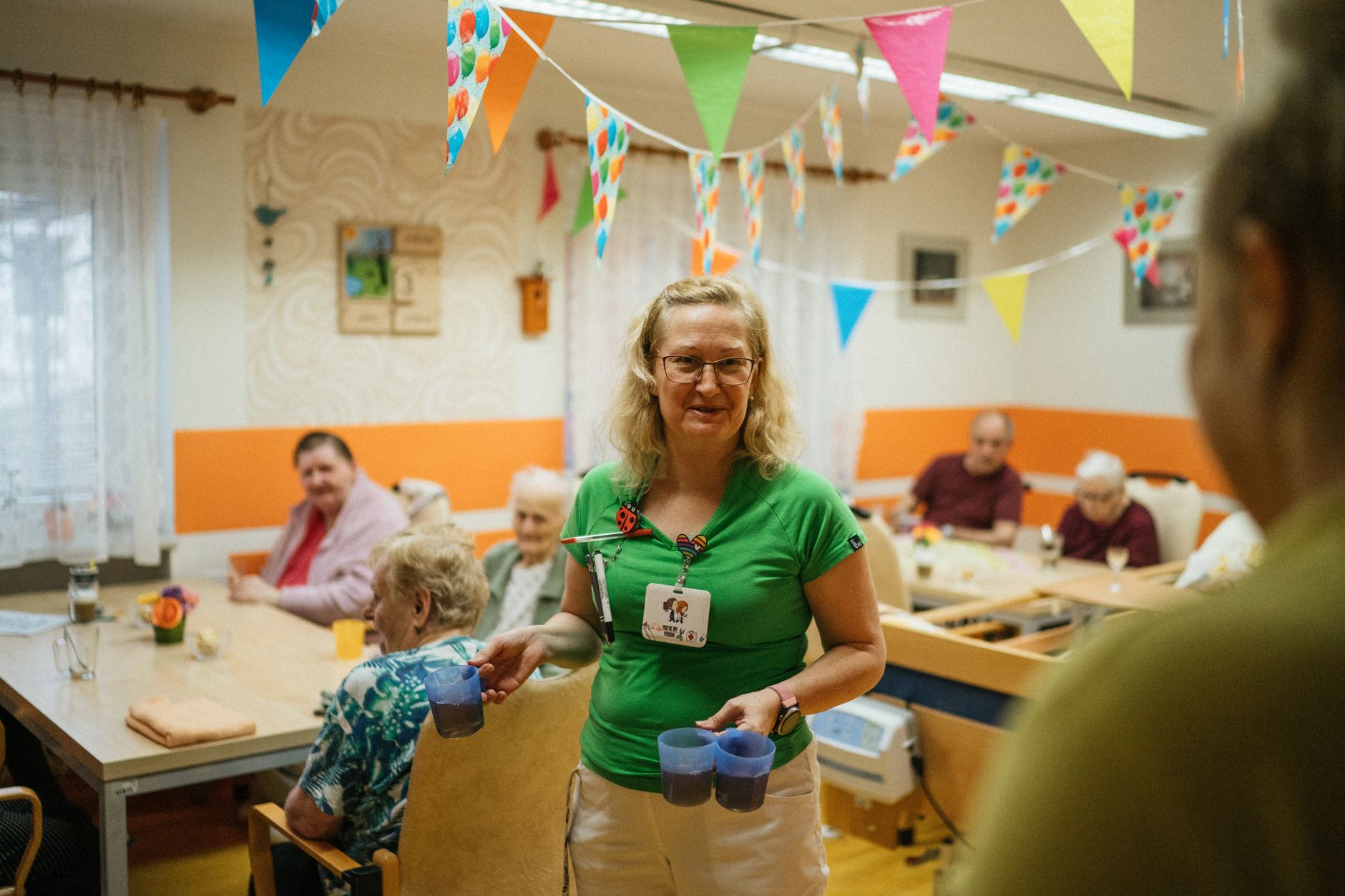
SSI recipients who live in federally funded group homes, Medicaid waiver facilities, or other congregate living arrangements face different ISM rules that can be more favorable in some ways but more complex in others. Many group homes are considered “food and shelter” providers by SSA, meaning the value of the bed, meals, utilities, and services is counted as in-kind support. However, many facilities are structured so that residents pay a portion of costs from their SSI check—and only the unpaid portion counts as ISM. For instance, Marcus lives in a group home for individuals with developmental disabilities. The home’s cost is $2,500 monthly per resident, but Marcus pays $843 (his entire SSI benefit, supplemented by Medicaid) toward this cost.
SSA counts only the $1,657 shortfall as in-kind support to Marcus. Because this group home is considered a “sheltered living” arrangement with legitimate providers, the one-third ISM reduction typically applies, and Marcus’s benefit is reduced by $315 (the cap). However, Marcus retains his full SSI eligibility and access to Medicaid, which he would lose if he were institutionalized in a nursing home. The warning here is that different facility types are treated differently under SSA rules. A foster care arrangement might trigger different calculations than a licensed group home, and small family care homes may be treated as household members rather than providers. You must verify with SSA or a benefits counselor exactly how your specific living situation will be classified.
The Trade-Off Between Independence and Benefit Reduction
One of the most significant practical decisions SSI recipients face is whether to live independently (even at financial hardship) to avoid ISM penalties, or to accept reduced benefits in exchange for housing security and support. Moving out on your own, renting an apartment, and paying 100 percent of your own shelter costs means you receive zero ISM reduction—your full SSI check is yours. However, living independently on SSI alone is often impossible. The federal benefit rate of $943 per month in 2024 is far below the median one-bedroom apartment rent in most U.S. cities.
Compare two scenarios: Jessica can live with her parents and have her shelter paid for (losing $315 in SSI monthly to the ISM rule, keeping $628), or she can attempt to rent a studio apartment for $800, in which case she loses nothing to ISM but must cover the full $800 rent from only $943 in SSI, leaving just $143 for all other expenses (food, transportation, phone, medical). Jessica’s choice is realistic: live with family and lose part of her benefit, or become destitute. Many SSI recipients must make this exact trade-off with no good option available. Some recipients pursue a middle path: they pay a modest amount—perhaps $200 to $300 monthly—to their household for shelter and food, which reduces but does not eliminate the ISM penalty. This requires household cooperation and, ideally, a written agreement documenting the arrangement in case SSA questions it later.
📨 Get Free Medicare Guides Alerts
Free · No spam · Unsubscribe anytime
Common Mistakes in Living Arrangements That Cost Recipients Thousands
One major mistake is failing to formalize payment arrangements in writing. When an SSI recipient lives with family and contributes to household expenses through informal agreement or gift-giving, SSA may not recognize these contributions when calculating ISM. If you give your mother $200 monthly as a gift, SSA does not count this as payment for shelter; it remains a gift. Only documented, ongoing payments for specific shares of rent or utilities are recognized as contributions that reduce ISM. A simple written agreement stating “John will pay $300 monthly for his portion of rent and utilities, effective January 1, 2024” is far stronger evidence than any number of informal transfers. Another critical mistake is misunderstanding the concept of “deeming” when household members’ income is counted toward your SSI limit.
If you live with a spouse or parent, their income is sometimes “deemed” (counted as yours) for SSI eligibility purposes, potentially making you ineligible for benefits altogether. For example, a 60-year-old widow receiving SSI who moves in with her adult son whose household income exceeds certain thresholds may lose SSI eligibility due to deemed income, even though the son does not give her money directly. Understanding the distinction between ISM (which reduces the amount you receive) and deeming (which can eliminate eligibility) is essential. A warning: changing your living situation without notifying SSA can result in overpayment that you will owe back. If you move from living independently to living with family and fail to report the change, SSA will eventually discover the unreported housing, recalculate your back benefits, and demand repayment of several months’ overpayments. Always report changes in living arrangements within 10 days of the change.

Strategic Planning: How to Minimize ISM While Maintaining Housing Security
For SSI recipients who have family support options, a structured approach to living arrangements can preserve more benefits. The most effective strategy is to establish a formal, documented rental agreement where you pay fair market rent or a realistic share of household expenses to the person providing shelter. If you pay $400 monthly to your parents for housing and utilities, and the actual allocation of those costs to you is $600, then only $200 qualifies as in-kind support. This requires discipline from both you and your household members—the payments must be consistent and documented (bank transfers, checks, or receipts are ideal).
Another strategy is to explore whether any group homes, care facilities, or subsidized housing options in your area are available. Some states have funded group homes specifically designed for SSI recipients, where the benefit reduction is capped at the one-third rule maximum (rather than larger reductions), and where residents gain access to supportive services. Medicaid waiver programs vary significantly by state, but many offer subsidized housing as part of home and community-based services. These options require advance planning and application, often involving waiting lists, but can substantially improve quality of life for individuals who qualify.
State Variations and the Future of SSI Living Arrangement Rules
SSI is a federal program, but many states supplement the federal benefit rate, and some state supplements have their own rules regarding in-kind support and maintenance. A few states have “state ISM rules” that differ from federal rules, potentially treating certain living arrangements more favorably. Additionally, some states operate state supplemental SSI programs with distinct shelter cost policies. For example, California and New York provide supplemental payments, and these supplements may have different ISM implications than federal SSI.
Verifying how your state’s rules interact with your specific living situation is essential. Looking forward, policy discussions around SSI have increasingly focused on the program’s fundamental inadequacy in today’s housing market. The federal benefit rate has not kept pace with inflation or housing costs for decades, making it nearly impossible for recipients to live independently in most urban areas. Some advocacy groups propose changes to ISM rules to allow recipients to contribute to household expenses without losing benefits, or to increase the shelter cost threshold before ISM reductions apply. While these changes are not imminent, the underlying pressure to reform SSI’s interaction with housing is growing, and future reforms could significantly alter the calculations discussed in this article.
Conclusion
Living arrangements directly shape SSI benefits through the in-kind support and maintenance rules, which reduce payments when others provide your food or shelter without compensation. The one-third reduction rule, pro rata shelter allocations, and ISM calculations create a complex system where a $200 difference in documented household contributions can translate to $100 or more in monthly benefit differences. Understanding these mechanics—and planning your living situation with these rules in mind—is essential for maximizing financial security.
If you receive or plan to receive SSI, your next step should be to review your current living arrangement with a benefits counselor, Social Security work incentive planner, or disability advocate. Ask specifically how your housing situation affects your ISM calculation, ensure that any household contributions you make are properly documented, and explore whether formal rental agreements, group home placements, or other structured arrangements might improve your financial picture. SSI is insufficient on its own in most cases, and thoughtful planning around living arrangements is one of the few levers available to maximize your available resources.